
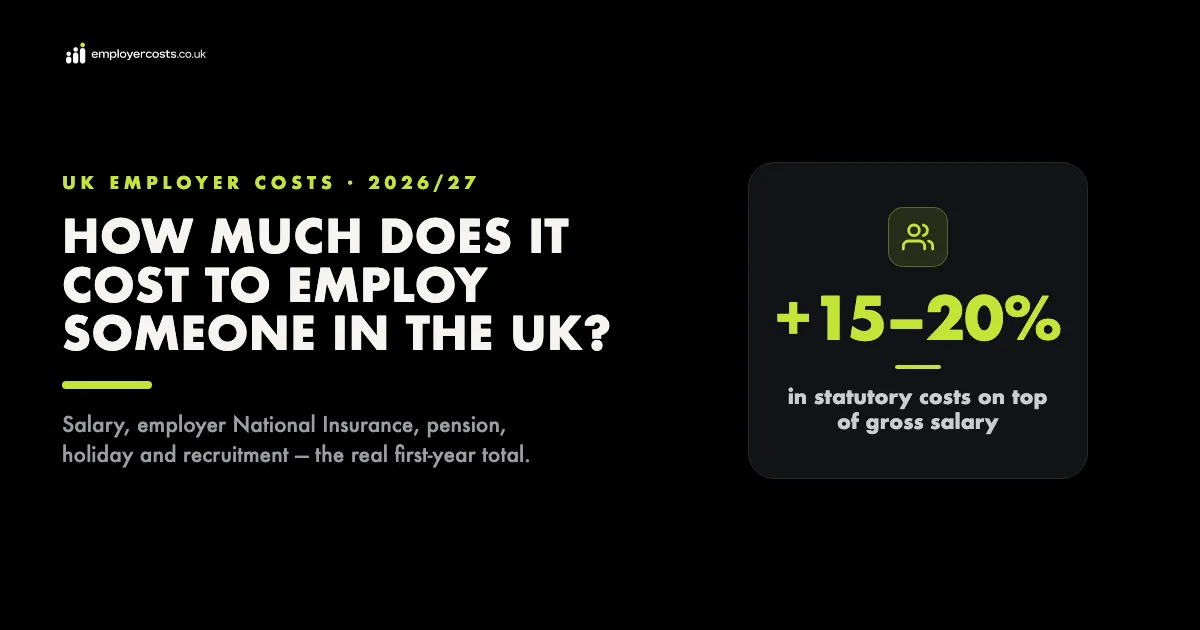
Employing someone in the UK costs 15-20% more than their gross salary in statutory on-costs alone, and 20-30% more once overheads are counted. For an employee on a £30,000 salary, employer National Insurance and workplace pension add £4,463 per year, and the all-in first-year cost lands between £36,000 and £39,000. The cost of employing someone is defined as the gross salary plus statutory on-costs plus recruitment and overhead spend. Statutory on-costs cover employer National Insurance contributions, workplace pension contributions, holiday pay, and statutory payments like sick pay.
True Cost of Employee Calculator
Enter a salary to see the full employer cost for 2026/27 — salary plus employer National Insurance, workplace pension and other on-costs.
The Employee
True Annual Cost
—
Enter a salary to see the breakdown.
Estimates only — verify with HMRC or a qualified accountant. Open the full calculator →
The total for the 2026/27 tax year is calculated by applying a 15% employer National Insurance rate to earnings above the £5,000 threshold and a 3% pension contribution on qualifying earnings. Costs scale with salary bands, with higher salaries carrying higher totals, and part-time hours calculated pro-rata. Sector, location, and employee age move the figure: London-based employees command higher salaries, while younger employees can qualify for National Insurance relief. Hidden costs like employee absence and turnover sit on top of the statutory floor.
Employers reduce the total through the Employment Allowance, salary sacrifice schemes, and hiring apprentices. The Employment Allowance cuts up to £10,500 off the annual employer National Insurance bill. Salary sacrifice arrangements lower National Insurance liabilities, and apprenticeships carry National Insurance exemptions. Compared with employing someone, a contractor removes statutory on-costs but brings higher day rates. Each component feeds the percentage-above-salary figure that the first section breaks down.
What Is the Total Cost of Employing Someone in the UK?
The total cost of employing someone in the UK is 115% to 130% of the gross salary in a normal year, and up to 150% in the first year once recruitment and setup are counted. For an employee on a gross salary of £30,000, the employer pays £34,463 in salary and statutory on-costs, and a typical first-year total of £36,000 to £39,000. The figure covers employer National Insurance contributions, workplace pension contributions, and statutory holiday pay.
The cost of employing someone starts with gross salary plus statutory on-costs: employer National Insurance at 15% of earnings above £5,000 per year, and workplace pension contributions from 3% of qualifying earnings. Recruitment, onboarding, and equipment spend push the total higher, and the first-year cost can exceed the base salary by 50% or more once every associated cost is counted, according to "How much does it cost to employ someone?" published by NatWest Mentor.
In 2026/27, the total employment cost calculation adds the statutory and indirect costs to the base salary. The calculation scales across salary bands and adjusts for part-time hours through pro-rata rates. Sector, location, and employee age move the total, and hidden costs like absence and turnover press on it further. Employers offset part of the bill through the Employment Allowance, salary sacrifice, and apprentice hiring, while a contractor can cost less for short engagements.
How Much Extra Does an Employee Cost on Top of Salary?
An employee costs 15% to 20% extra on top of gross salary in mandatory employment costs. The on-cost percentage comes from employer National Insurance contributions, workplace pension contributions, and statutory leave and pay entitlements. Employer National Insurance is the largest single component, followed by the pension minimum. Each on-cost carries its own rate and threshold, and the component breakdown below shows where every pound goes.
What Costs Make Up the Cost of Employing Someone?
The costs that make up the cost of employing someone are listed below:

- Employer National Insurance, charged at 15% on earnings above £5,000 per year
- Workplace pension contributions of at least 3% of qualifying earnings
- Statutory holiday and sick pay, covering 28 days of paid leave and sick pay of £123.25 per week
- Recruitment and onboarding spend of £1,500 to £6,125 per hire depending on the route
- Equipment and workspace setup of £560 to £2,750 per employee depending on the role
How Much Employer National Insurance Do You Pay per Employee?
Employers pay National Insurance at 15% on earnings above the secondary threshold of £5,000 per year. For an employee on an annual salary of £30,000, the employer National Insurance liability is £3,750. The calculation subtracts the £5,000 threshold from the salary, leaving £25,000, and applies the 15% rate to that amount. Employer National Insurance is the largest statutory on-cost in the employment budget.
What Is the Employer NI Rate for 2026/27?
The employer National Insurance rate for the 2026/27 tax year is 15% on earnings above the secondary threshold. GOV.UK's "Rates and thresholds for employers 2026 to 2027" confirms the 15% rate on all employee earnings above £5,000 per year, continuing the rate introduced in April 2025 when the rate rose from 13.8%. For most employees aged 21 and over, employer National Insurance starts once salary passes the threshold. Reliefs exist for under-21s and apprentices under 25, whose earnings carry no employer National Insurance up to £50,270.
When Does Employer NI Start on an Employee's Salary?
Employer National Insurance starts once an employee's earnings pass the secondary threshold of £5,000 per year for 2026/27. The threshold equates to £96 per week or £417 per month. Above the threshold, employers pay National Insurance on the portion of salary over £5,000. An employee earning £6,000 per year triggers employer National Insurance on £1,000, a contribution of £150. The threshold applies uniformly across employees, which keeps cost planning consistent.
How Much Workplace Pension Do Employers Pay per Employee?
Employers pay a minimum workplace pension contribution of 3% of an employee's qualifying earnings. Qualifying earnings run from £6,240 to £50,270 of salary for 2026/27. An employee earning £30,000 per year has qualifying earnings of £23,760, so the employer contributes £712.80 per year, around £59.40 per month. Employers can pay above the statutory minimum, but 3% is the mandated baseline under auto-enrolment.
How Much Does Holiday Entitlement Cost per Employee?
Holiday entitlement costs an employer roughly 10.8% of gross salary in paid time when no work is produced. UK employees receive 5.6 weeks, or 28 days, of paid annual leave per year. For an employee earning £30,000, holiday pay represents approximately £3,220 of the salary. Holiday pay does not appear as a separate payroll line, yet workforce planning and project budgeting must carry it. Employers can face extra spend on cover staff or overtime to hold service levels during peak holiday periods, which raises the true cost of annual leave beyond the base calculation.
What Statutory Pay Costs Do Employers Cover?
The statutory pay costs employers cover are listed below:
| Statutory Sick Pay | of £123.25 per week for eligible employees, payable from the first day of absence |
|---|---|
| Statutory Maternity Pay | of £194.32 per week or 90% of average weekly earnings, whichever is lower |
| Statutory Paternity Pay | of £194.32 per week or 90% of average weekly earnings for fathers and partners |
| Statutory Adoption Pay | of £194.32 per week or 90% of average weekly earnings for adoptive parents |
How Much Does It Cost to Recruit an Employee?
Recruiting an employee costs £6,125 on average per vacancy once labour costs are included, rising to around £19,000 for management roles, based on estimates from the CIPD's "Resourcing and Talent Planning" research. Recruitment spend covers job advertising, screening and compliance checks, interview time, and agency or headhunter fees. Agency fees alone run from 15% to 30% of the new hire's first-year salary. The median direct spend sits far lower, around £1,500 for non-management roles, which makes the hiring route the biggest single lever on recruitment cost.
What Onboarding and Training Costs Do New Employees Add?
Onboarding and training add £2,600 to £7,400 per new employee, according to "The Cost of Onboarding a New Employee" published by Veremark. Onboarding spend covers background checks, administrative setup, induction, and a training budget of around £1,530 per hire. A new employee needing a full workplace setup pushes the total toward the top of the range, while an employee slotting into existing equipment and systems lands near the bottom. The productivity gap while a new hire learns systems and processes adds a further hidden cost that formal budgets rarely carry.
What Equipment and Overhead Costs Come With an Employee?
Equipment and overhead costs run from £560 to £2,750 per employee per year. The overhead budget covers computers, software licences, and workspace utilities. The exact figure depends on the role and on whether the employee works on-site or remotely.
- Basic setup covers a desk, chair, laptop, and standard software
- Technical roles can require high-specification hardware and specialised software
- Remote work adds connectivity and home office setup costs
How Do You Calculate the Cost of Employing Someone?
To calculate the cost of employing someone, work through the steps below:
- Start with the Gross Salary Take the gross annual salary as the base amount every other cost builds on.
- Add Employer National Insurance Contributions Apply 15% to earnings above £5,000 per year. The amount scales with salary above the threshold.
- Include Workplace Pension Contributions Add a minimum of 3% of qualifying earnings between £6,240 and £50,270.
- Account for Holiday and Statutory Pay Recognise statutory holiday pay of 5.6 weeks per year, built into the salary but worth tracking separately, plus sick pay exposure.
- Consider Recruitment Costs Add recruitment spend, which runs from around £1,500 for a direct hire to 15-30% of salary for an agency placement, incurred in the first year.
- Factor in Onboarding and Training Expenses Add £1,530 to £3,600 for induction, training, and integration.
- Include Equipment and Overhead Costs Add £560 to £2,750 for the workstation and systems the role requires.
The sum of these components gives a total 20% to 40% above the gross salary in the first year, which is the full financial commitment of the hire. To skip the maths, use our True Cost of Employee Calculator to work out the total annual and monthly cost for any salary.
What Is the Employer Cost Formula for 2026/27?
The employer cost formula for 2026/27 is: Gross Salary + Employer National Insurance (15% on earnings above £5,000 per year) + Workplace Pension (3% of qualifying earnings) + Recruitment Costs + Onboarding and Training + Equipment and Overheads = Total Employment Cost. Employer National Insurance applies at 15% to earnings above the £5,000 secondary threshold, and the minimum pension contribution is 3% of qualifying earnings between the lower and upper limits.
To apply the employer cost formula, subtract £5,000 from the gross annual salary and multiply the remainder by 15% for the National Insurance line. Add 3% of qualifying earnings for the pension line. Add the one-off costs: recruitment of £1,500 to £6,125, onboarding and training of £1,530 to £3,600, and equipment of £560 to £2,750. The formula scales proportionally across salary bands and adjusts for part-time employees by pro-rating hours against the full-time calculation.
What Does Employing Someone Cost per Month?
Employing someone on £30,000 per year costs approximately £2,872 per month in direct payroll terms. The monthly figure combines a gross salary of £2,500, employer National Insurance of £312.50, and workplace pension contributions of £59.40. Direct statutory costs recur every month of the employment.
The monthly cost moves with salary and the applicable National Insurance amount. Recruitment, onboarding, and equipment spend arrive as first-year additions on top of the recurring payroll figure, and belong in the monthly budget as amortised lines.
How Much Does It Cost to Employ Someone by Salary?
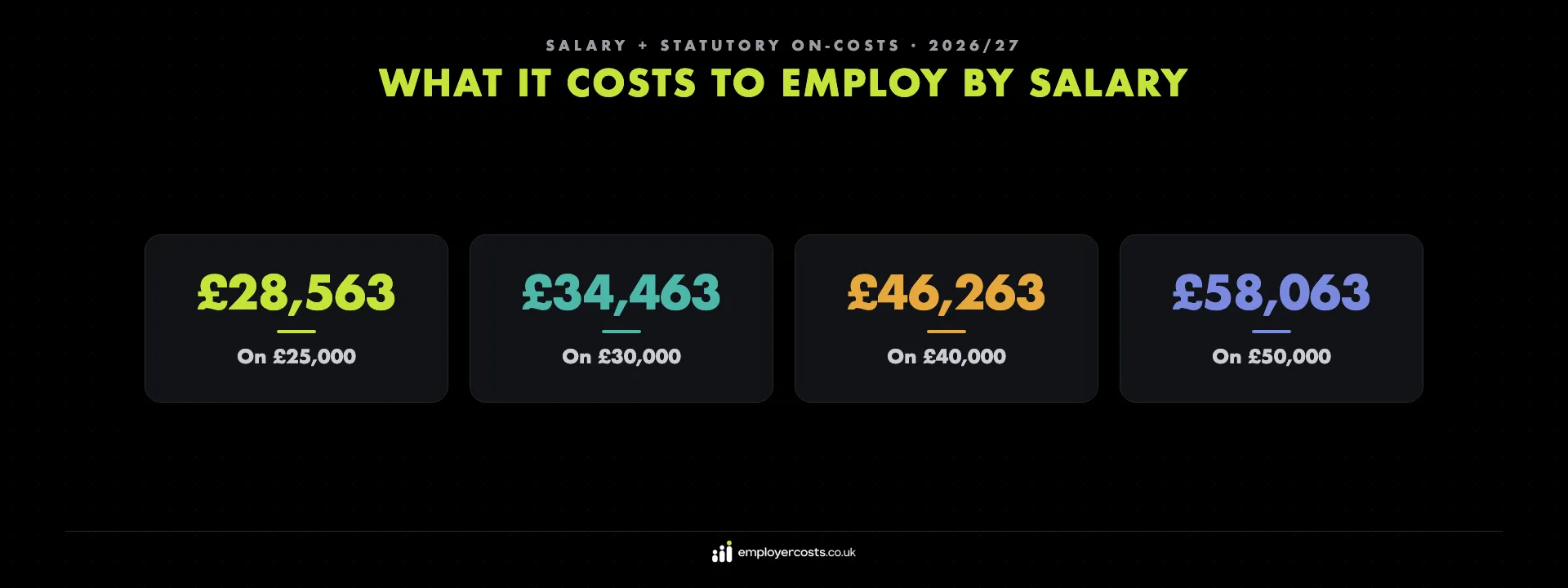
The cost of employing someone scales with the salary band, adding 15-20% to base salary in statutory on-costs at every level. An employee on £25,000 costs approximately £28,563 in salary and statutory on-costs, while an employee on £50,000 costs approximately £58,063. Each band below shows the employer National Insurance and pension amounts plus the first-year extras for recruitment, onboarding, and equipment.
Cost to Employ Someone on £25,000
Employing someone on £25,000 costs £28,563 in salary and statutory on-costs. Employer National Insurance contributes £3,000 and workplace pension contributions add £563. First-year extras for recruitment, onboarding, and equipment lift the total to between £31,000 and £35,000.
Cost to Employ Someone on £30,000
Employing someone on £30,000 costs £34,463 in salary and statutory on-costs. Employer National Insurance contributes £3,750 and workplace pension contributions add £713. First-year extras for recruitment, onboarding, and equipment lift the total to between £37,000 and £42,000 depending on the hiring route.
Cost to Employ Someone on £40,000
Employing someone on £40,000 costs £46,263 in salary and statutory on-costs. Employer National Insurance contributes £5,250, calculated at 15% on earnings above £5,000, and workplace pension contributions add around £1,013. First-year extras for recruitment, onboarding, and equipment lift the total to between £50,000 and £52,000.
Cost to Employ Someone on £50,000
Employing someone on £50,000 costs £58,063 in salary and statutory on-costs. Employer National Insurance contributes £6,750 and workplace pension contributions add about £1,313. First-year extras for recruitment, onboarding, and equipment run £5,000 to £15,000 depending on the hiring route, bringing the first-year total to between £63,000 and £73,000.
How Much Does It Cost to Employ Someone Part-Time?
Employing someone part-time costs a pro-rata share of the full-time figure, scaled to hours worked. Part-time employees receive equivalent hourly rates and benefits to full-time staff, so the cost per hour stays level while the total falls with the hours. A role costing £40,000 full-time at 40 hours a week costs approximately £20,000 at 20 hours a week. The £5,000 National Insurance threshold is not pro-rated, which makes part-time hires proportionally slightly cheaper on National Insurance.
Cost of Employing Someone 16 Hours a Week
Employing someone 16 hours a week costs approximately £13,200 per year against a £30,000 full-time equivalent salary on 40 hours. The pro-rata gross salary is £12,000. Employer National Insurance adds £1,050, charged at 15% on earnings above the £5,000 threshold, and the minimum workplace pension contribution adds around £173 on qualifying earnings. Part-time costs scale down with hours while the fixed £5,000 threshold takes a proportionally larger bite out of the National Insurance bill.
Cost of Employing Someone 25 Hours a Week
Employing someone 25 hours a week costs approximately £21,200 per year against a £30,000 full-time equivalent salary on 40 hours. The pro-rata gross salary is £18,750. Employer National Insurance adds £2,063 and the minimum workplace pension contribution adds £375. Pro-rated holiday entitlement of 5.6 weeks applies to the reduced hours, keeping statutory obligations aligned with the shorter week.
Cost of Employing Someone 30 Hours a Week
Employing someone 30 hours a week costs approximately £25,600 per year against a £30,000 full-time equivalent salary on 40 hours. The pro-rata gross salary is £22,500. Employer National Insurance adds £2,625 and the minimum workplace pension contribution adds around £488. The 30-hour cost sits at roughly 85% of the full-time total because the fixed National Insurance threshold favours reduced hours.
What Factors Change the Cost of Employing Someone?
The factors that change the cost of employing someone are listed below:
- Sector, since industries carry different salary norms, compliance duties, and benefits expectations
- Location, since regions like London carry wage premiums and higher overheads
- Employee age, since under-21s and young apprentices attract employer National Insurance relief
How Does Sector Change the Cost of Employing Staff?
Sector changes the cost of employing staff through compliance requirements, skills shortages, and industry-specific cost lines. Healthcare and technology carry higher employment costs because competition for specialised talent and regulatory compliance both run high. Industries with skills shortages need premium recruitment spend, higher salaries, and heavier training investment to bring employees to standard. Social care adds sector-specific costs like enhanced DBS checks, while construction carries levy and certification costs of its own. The sector sets the variable cost levers, from recruitment fees to mandatory training, that sit on top of the statutory floor.
How Does Location Change Employment Costs in the UK?
Location changes employment costs through living costs and market conditions. In London and the South East, salary expectations run 10-30% above the national average, driven by higher living costs and competitive labour markets. Office rent, utilities, and commuting subsidies add further spend in the capital. Employing someone in London can carry a total cost multiplier of 1.30x to 1.50x the gross salary, against roughly 1.25x in lower-cost regions like the North. Regional gaps in skill availability can force higher recruitment spend and richer benefit packages on top.
How Does Employee Age Change Employer NI Costs?
Employee age changes employer National Insurance costs through age-related reliefs. Employers pay no employer National Insurance on earnings for employees under 21 or apprentices under 25, up to the upper secondary threshold of £50,270 per year. For employees aged 21 and over, the standard 15% rate applies above £5,000. Age-related relief produces real savings: hiring a 20-year-old on £30,000 saves the employer £3,750 in National Insurance against hiring someone aged 21 or over in the same role.
What Are the Hidden Costs of Employing Someone?
The hidden costs of employing someone are employee absence and employee turnover. Absence creates spend through lost productivity, sick pay, and temporary cover. Turnover creates spend through recruiting, onboarding, and training a replacement. Both sit outside the payslip yet press directly on the total cost of employing staff.
How Much Does Employee Absence Cost Employers?
Employee absence costs employers through sick pay, cover, and lost output. Statutory Sick Pay runs at £123.25 per week, and covering absent workloads through overtime or temporary staff adds more. The IPPR Commission on Health and Prosperity's July 2024 report found UK employees average 6.7 days of sick leave per year, with the hidden annual cost of employee sickness across the UK economy reaching £103 billion in 2023, up £30 billion since 2018. Management time spent on absence administration, plus the strain on team morale and customer service, adds spend that rarely appears in absence budgets.
How Much Does Employee Turnover Add to Employment Costs?
Employee turnover adds £15,000 to £30,000 in replacement costs for standard roles, and £40,000 to £100,000 for senior or specialised positions. A 2014 study, "The Cost of Brain Drain" by Oxford Economics for Unum, found replacing an employee earning £25,000 or more costs £30,614 on average, split between £5,433 in logistics like agency fees and advertising, and £25,182 in lost output while the new hire climbs to full productivity over roughly 28 weeks. Turnover costs on that scale make the cost-reduction levers on employer National Insurance worth systematic use.
How Can You Reduce the Cost of Employing Someone?
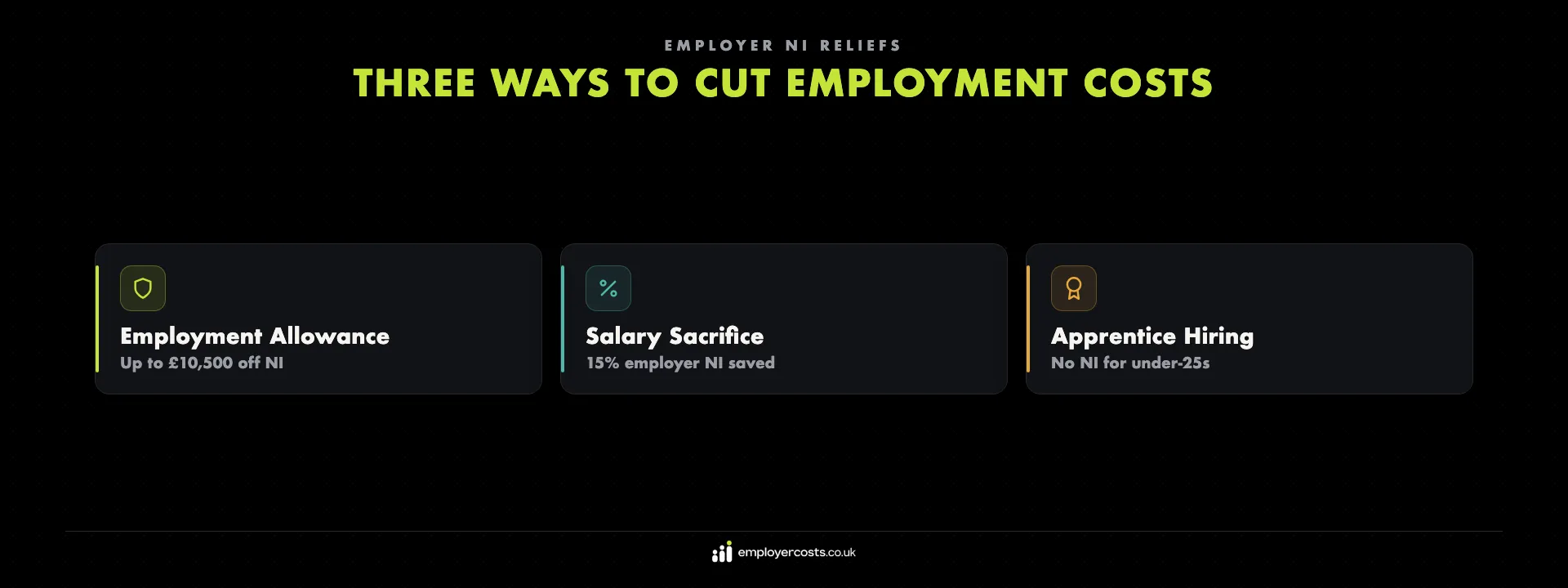
The Employment Allowance, salary sacrifice schemes, and apprentice hiring are the three levers that reduce the cost of employing someone. The Employment Allowance cuts the employer National Insurance bill directly. Salary sacrifice lowers the earnings on which employer National Insurance is charged. Apprentices under 25 carry employer National Insurance relief and funded training. Each lever cuts cost while staying inside statutory requirements.
How Much Employer NI Does the Employment Allowance Save?
The Employment Allowance saves eligible employers up to £10,500 per year in employer National Insurance. The allowance applies across the 2025/26 and 2026/27 tax years to qualifying businesses and charities. Eligibility requires paying Class 1 National Insurance on wages and not being a public sector body unless registered as a charity. Small employers gain the most, since an employer National Insurance bill below £10,500 disappears entirely under the allowance.
How Much Can Salary Sacrifice Save on Employer NI?
Salary sacrifice saves employers 15% in National Insurance on every pound of salary exchanged for non-cash benefits. An employee exchanges part of their gross salary for benefits such as pension contributions, and both employer and employee pay National Insurance on the lower amount.
An employee on £35,000 who sacrifices £2,000 into their workplace pension leaves the employer calculating National Insurance on £33,000 instead of £35,000. At the 2026/27 employer rate of 15% above the £5,000 threshold, the exchange saves the employer around £300 per year while the employee's pension pot grows.
Does Employing an Apprentice Cost Less?
Yes, employing an apprentice costs less than hiring a standard employee. Government funding covers up to 100% of training and assessment costs for eligible apprentices, and employers pay no employer National Insurance for apprentices under 25 earning below £967 per week. Apprentice minimum wage rates sit below the National Living Wage, lowering the pay floor further. Employers with fewer than 50 staff receive full funding for apprenticeship training when hiring apprentices aged 16-18 or 19-24 with an Education, Health and Care Plan, which makes the apprentice route the cheapest compliant way to grow headcount.
Is It Cheaper to Hire a Contractor Than to Employ Someone?
No, hiring a contractor costs more than employing someone for ongoing roles. Contractors charge higher day rates to cover their own taxes, insurance, and missing benefits, which puts continuous contractor work 30-40% above the annual cost of an equivalent permanent employee. Contractors win on short-term projects, where the absence of employer National Insurance, pension, and statutory leave costs outweighs the higher rate. A permanent employee on £50,000 costs approximately £58,063 per year including National Insurance and pension, while a contractor at a comparable day rate of around £250 reaches a similar annual figure long before a full working year completes. Contractors buy flexibility for short engagements; permanent employees buy cost efficiency and stability for sustained roles.
How Much Does Employing Someone Through an Agency Cost?
Employing someone through an agency costs a markup of 15% to 30% on the candidate's first-year salary for permanent placements. For temporary or contract roles, agency markups run from 25% to 50% above the worker's base pay, covering the agency fee, employer National Insurance, holiday pay, and administrative margin. A role advertised at £30,000 can cost the business £36,000 to £39,000 in the first year once agency fees are counted.
Does It Cost More to Employ Someone in London?
Yes, employing someone in London costs more than in other UK regions. Higher living costs raise salary expectations, and employers add a London weighting of 10-20% to base pay. Office rental and operational spend run higher too, with office occupancy costs reaching an estimated £33,000 per employee per year in central London. The combination of weighted salaries and heavier overheads makes the capital the most expensive place in the UK to employ staff.
What Is the Minimum Cost of Employing Someone in the UK?
The minimum cost of employing someone in the UK is approximately £30,200 per year for a full-time adult worker. The floor comes from the National Living Wage of £12.71 per hour for workers aged 21 and over, which produces a gross annual salary of around £26,400 on a 40-hour week. Employer National Insurance adds about £3,210 at 15% above £5,000, and the minimum workplace pension contribution adds around £605. The calculation assumes no benefits or overheads beyond statutory requirements. For employees under 21 or apprentices under 25, the National Insurance line disappears up to £50,270 of earnings, cutting the minimum to roughly £27,000 per year.
What Does It Cost to Employ Your First Employee?
Employing your first employee costs £1,500 to £4,000 in setup on top of salary and statutory on-costs. First-hire setup covers recruitment, equipment, onboarding, and compliance. A first hire on £30,000 needs a first-year budget of around £36,000 to £38,500 once statutory costs and setup are counted. First-time employers must register with HMRC as an employer and run payroll software, which costs £5 to £50 per month. The £10,500 Employment Allowance can remove most or all of a first employee's National Insurance bill.
How Do You Budget for the Full Cost of Employing Someone?
To budget for the full cost of employing someone, work through the steps below:
- Calculate Statutory Floor Costs Take the gross salary, add employer National Insurance at 15% on earnings above £5,000, and add the minimum workplace pension of 3% of qualifying earnings between £6,240 and £50,270.
- Layer Operational Reality Costs Add recruitment of £1,500 to £6,125 per hire, onboarding and training of £1,530 to £3,600, and equipment and workspace setup. A £35,000 salary rises past £43,000 of total spend on these lines.
- Account for Hidden Costs of Absence and Turnover Budget for absence, lost productivity, and sick pay cover, and hold a provision for turnover, where replacing an employee earning £25,000 or more averages £30,614.
- Apply Cost-Reduction Levers Claim the Employment Allowance of up to £10,500 off the National Insurance bill where eligible, and weigh salary sacrifice schemes and apprentice routes for further relief.
- Validate Against Salary Bands and Part-Time Scenarios Pro-rate part-time hours while keeping the £5,000 National Insurance threshold un-prorated, and cross-check totals against the salary-band examples, such as a £30,000 salary landing between £37,000 and £42,000 all-in.
A budget built this way lands on the consensus for the total cost of employing someone in the UK: 15-20% above salary for the statutory floor, rising to 20-40% once operational and hidden costs are counted.