
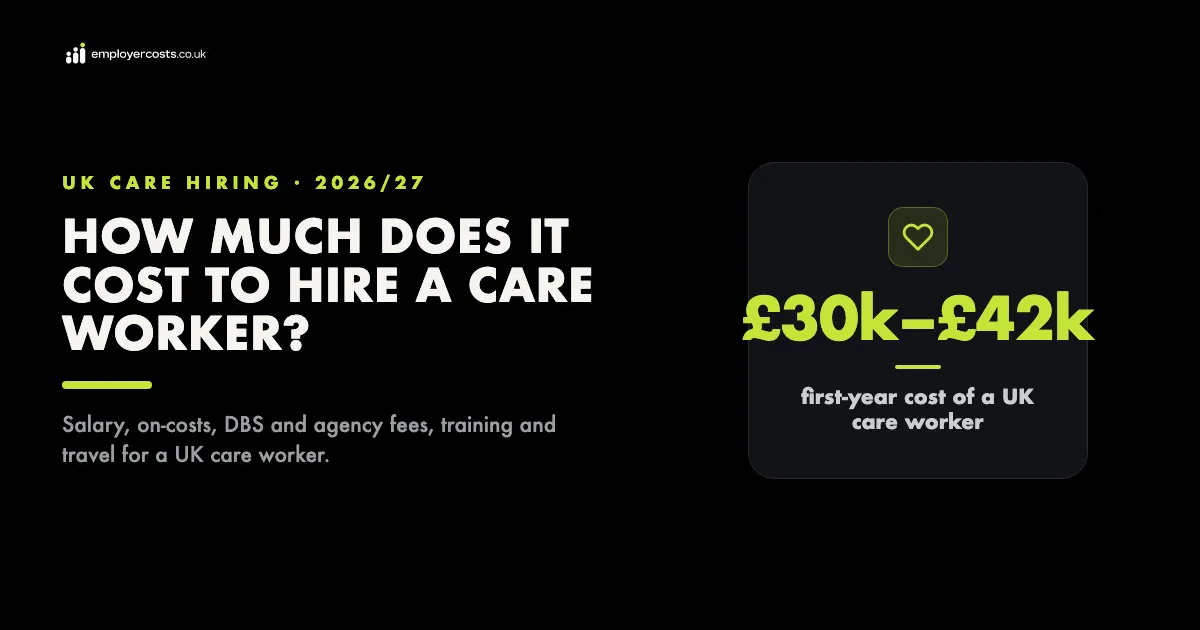
The total first-year cost of hiring a care worker in the UK ranges from £30,000 to £42,000. The cost of hiring a care worker combines the base salary, statutory on-costs, recruitment spend, and role-specific expenditure. Statutory employment costs cover employer National Insurance at 15% on earnings above the threshold, workplace pension contributions at 3% of qualifying earnings, and paid leave across holiday and sick pay.
True Cost of Employee Calculator
Enter a salary to see the full employer cost for 2026/27 — salary plus employer National Insurance, workplace pension and other on-costs.
The Employee
True Annual Cost
—
Enter a salary to see the breakdown.
Estimates only — verify with HMRC or a qualified accountant. Open the full calculator →
Recruitment spend for a care worker adds agency fees, an enhanced DBS check, and overseas sponsorship where the hire comes from abroad. Role-specific budget lines pay for Care Certificate training and travel between visits for domiciliary staff. Two variables move a care worker's total most: shift patterns, where night and weekend work carry premium rates, and the National Living Wage, which sets the pay floor. Working these elements through alongside the base salary produces the true first-year cost for a specific hire, broken down in full in the first section below.
What Is the Total Cost of Hiring a Care Worker in the UK?
The total cost of hiring a care worker in the UK is £30,000 to £42,000 in the first year. The first-year total combines base salary, statutory employment costs, recruitment spend, and role-specific investment, which together lift the cost of a care worker well above the headline salary, according to "How much does an employee really cost UK employers in 2026?" published by PayFit, November 2025. Base pay sits between £23,000 and £26,000 for most care workers, and statutory on-costs such as employer National Insurance and workplace pension add roughly 15% to 18% of salary.
Recruitment spend swings the total most: a direct hire needs only an enhanced DBS check, while an agency placement adds 15% to 25% of salary and an overseas hire brings Home Office sponsorship fees on top. Care Certificate training and travel reimbursement for domiciliary staff complete the role-specific layer. Shift premiums and the wage floor lift the base pay itself, which then raises every salary-linked on-cost with it. Costing a full care rota? Our Team Cost Planner totals pay and on-costs across every worker on it.
What Is the Average Care Worker Salary in the UK?
The average care worker salary in the UK is £23,000 to £26,000 per year, set by an hourly rate close to the wage floor. Entry-level care workers start near the bottom of that band, while experienced staff, specialist roles, and London-weighted posts reach the upper end and beyond. Skills for Care reports the median hourly pay for a care worker in the independent sector at £12.60, a little above the National Living Wage, in "Pay in the adult social care sector in England, as at December 2025," which puts full-time annual pay around £24,800 before on-costs.
How Much Does a Care Worker Cost per Hour to Employ?
A care worker costs £14 to £17 per hour to employ, above the headline pay rate. That fully-loaded figure adds employer National Insurance, workplace pension contributions, and holiday accrual to the base wage. A care worker paid the National Living Wage of £12.71 an hour costs roughly £15 to £16 an hour once statutory on-costs are added. The per-hour components break down across the sections below.
What Employment Costs Do You Pay on a Care Worker's Salary?
Three statutory employment costs sit on top of a care worker's base salary: employer National Insurance, workplace pension contributions, and paid leave. Employer National Insurance applies to earnings above the secondary threshold, the workplace pension follows auto-enrolment minimums, and paid leave covers the statutory 5.6 weeks of annual holiday plus Statutory Sick Pay exposure. Each mandatory cost is worked through in turn below.
How Much Employer National Insurance Do You Pay for a Care Worker?
Employer National Insurance for a care worker is charged at 15% on earnings above the £5,000 secondary threshold for the 2026/27 tax year, a rate published by GOV.UK in "Rates and thresholds for employers 2026 to 2027." A care worker earning £22,000 a year passes £17,000 above the threshold, so the employer National Insurance bill reaches £2,550 for the year. The employer NI charge rises in step with pay, so a higher hourly rate or added shift premiums lift this line before pension and leave are counted.
How Much Workplace Pension Do You Pay for a Care Worker?
The minimum employer workplace pension for a care worker is 3% of qualifying earnings, the band between £6,240 and £50,270. Auto-enrolment applies to a care worker aged 22 or over earning above £10,000 a year. A care worker on £22,000 produces qualifying earnings of £15,760, so the employer pension contribution reaches approximately £473 a year. Many care providers pay above the 3% floor to hold on to experienced staff in a competitive labour market.
How Much Holiday and Sick Pay Does a Care Worker Cost?
A care worker is entitled to 5.6 weeks of paid annual leave, or 28 days for a full-time role. Holiday pay is calculated on normal remuneration, so it carries any regular overtime and shift allowances with it, and for hourly-paid care staff it accrues at 12.07% of hours worked. Statutory Sick Pay adds a separate exposure of £123.25 per week for the 2026/27 tax year, payable for up to 28 weeks per period of sickness. Actual sick-pay cost tracks the care worker's attendance, so employers hold it as a contingency rather than a fixed line.
How Much Does It Cost to Recruit a Care Worker?
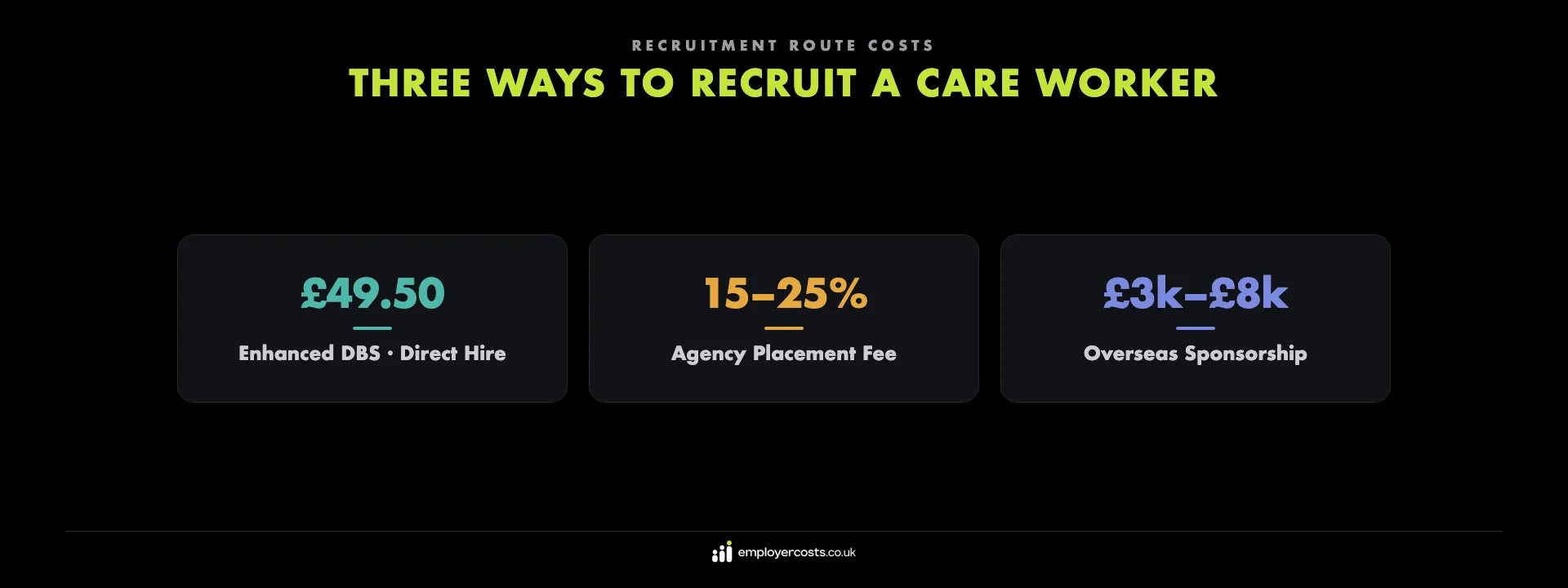
Recruiting a care worker carries three main costs: agency placement fees, an enhanced DBS check, and overseas sponsorship where the hire comes from abroad. Agency fees buy candidate sourcing and vetting, the enhanced DBS check clears the worker for regulated activity, and sponsorship covers the Home Office fees for an international recruit. Each recruitment cost is set out below.
What Do Care Recruitment Agencies Charge?
Care recruitment agencies charge 15% to 25% of a care worker's first-year salary for a permanent placement, within the wider 10% to 30% band UK agencies apply, according to "What Are Average Recruitment Agency Fees in the UK?" published by Get Staffed, 2022. The fee covers sourcing, DBS-verified vetting, and placement of the candidate. For hard-to-fill or specialist roles such as complex or dementia care, the fee climbs toward 30%. The band tracks the standing UK benchmark for permanent care-sector placements.
How Much Does an Enhanced DBS Check Cost for a Care Worker?
An enhanced DBS check for a care worker costs £49.50, the statutory fee set by GOV.UK. The enhanced check clears an individual for regulated activity with vulnerable adults, covering the adults' or children's barred lists where the role requires it. An umbrella body or registered platform adds an administration fee on top, which lifts the total to £60 to £80 in most cases. The £49.50 statutory component stays fixed whichever provider processes the application.
How Much Does Sponsoring an Overseas Care Worker Cost?
Sponsoring an overseas care worker adds mandatory Home Office fees on top of salary. The main components are a sponsor licence, which costs £574 for a small sponsor and covers multiple hires, a Certificate of Sponsorship at £525 per worker, and, where it applies, the Immigration Skills Charge of £480 a year for small sponsors. Employers commonly cover the worker's visa fee as well, which brings the realistic per-worker cost to £3,000 to £8,000 for a small sponsor. Sponsorship suits providers filling roles the domestic labour market cannot, and the licence cost spreads across every worker it supports.
What Care-Specific Costs Should You Budget For?
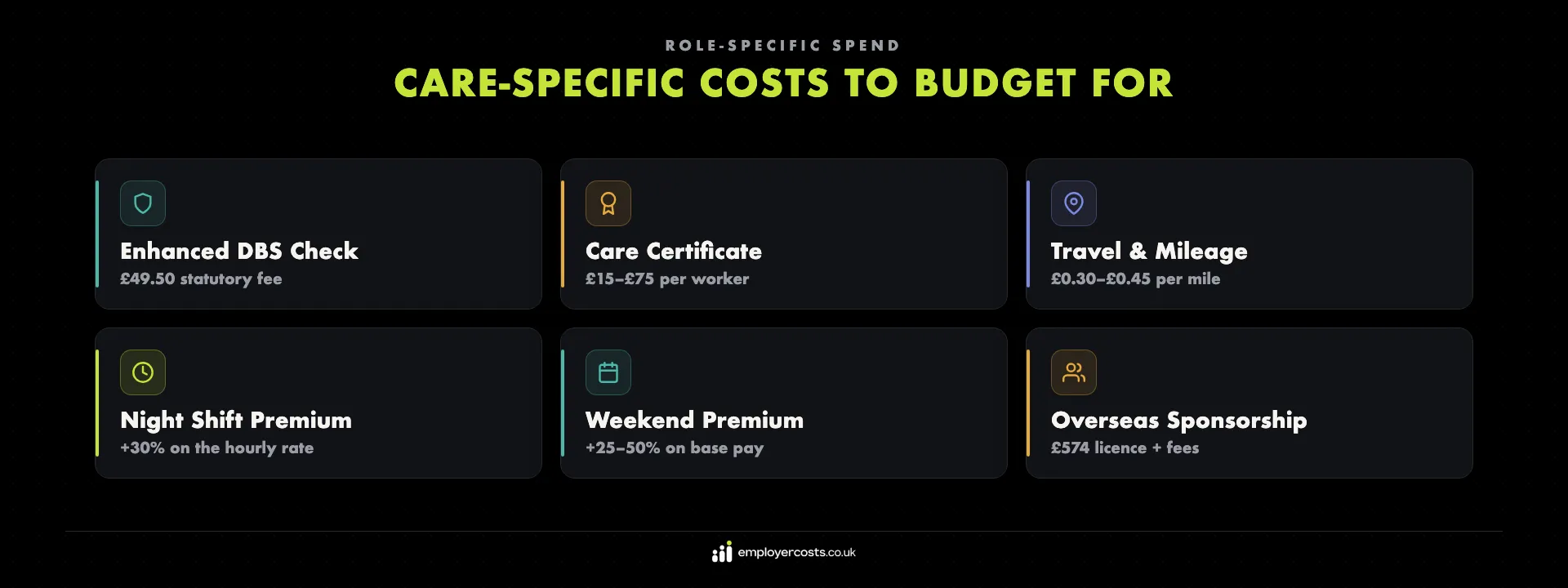
Beyond salary and statutory on-costs, a care worker needs role-specific training and travel cover before delivering compliant care. Care Certificate training brings the worker up to national care standards, and travel reimbursement covers the mileage domiciliary staff run between client visits. Both care-specific lines are set out below.
How Much Does Care Certificate Training Cost per Worker?
Care Certificate training costs £15 to £75 per worker for e-learning delivery, rising to £250 for a classroom course. Online courses covering the core standards start near £15, while standard e-learning sits around £75 plus VAT. The Care Certificate spans 15 standards for health and social care staff, including duty of care, safeguarding, and communication. Many providers deliver the training in-house to cut the per-worker cost, which shifts the expense to existing staff time for supervision and assessment.
How Much Do Travel and Mileage Costs Add for Domiciliary Care Workers?
Travel and mileage costs for domiciliary care workers add £0.30 to £0.45 per mile. A provider that reimburses at its own rate often pays £0.30 per mile, while the HMRC-approved allowance runs at £0.45 per mile for the first 10,000 miles and £0.25 after that. Monthly travel spend per worker reaches £100 to £300, set by the distance covered and the number of daily visits. Travel time between visits must also be paid at least at the National Living Wage, so unpaid travel cannot pull the effective hourly rate below the floor.
What Factors Change the Cost of Hiring a Care Worker?
Three variables reshape a care worker's total cost: shift patterns, the National Living Wage, and the complexity of the care delivered. Night and weekend shifts add premium pay, the wage floor sets the minimum base rate, and specialist needs such as dementia or complex care lift the rate again. Each factor is examined below.
How Do Night and Weekend Shifts Change a Care Worker's Cost?
Night and weekend shifts raise a care worker's cost through premium pay for unsociable hours. A night shift commonly attracts a 30% uplift, so a care worker on £12.71 an hour by day costs about £16.52 an hour at night. Weekend premiums run similar or higher, from 25% to 50% above the base rate. Higher shift pay also lifts employer National Insurance and pension, since both apply to the raised earnings. Waking-night care, where the worker stays active across the shift, costs more than a sleep-in, which pushes the overall figure up again.
Does the National Living Wage Set the Floor for Care Worker Costs?
Yes, the National Living Wage sets the floor for care worker costs in the UK. Employers must pay at least £12.71 an hour to a care worker aged 21 or over from 1 April 2026, as confirmed by GOV.UK in "National Living Wage increases to £12.71 per hour." The wage floor fixes the base pay on which every variable cost is layered, from employer National Insurance and pension to recruitment fees. Reading the floor first keeps the true-cost calculation for a specific care worker accurate, since it anchors every on-cost above it.
How Do You Calculate the True Cost of Employing a Care Worker?
The true cost of employing a care worker is the sum of six components, worked in order:
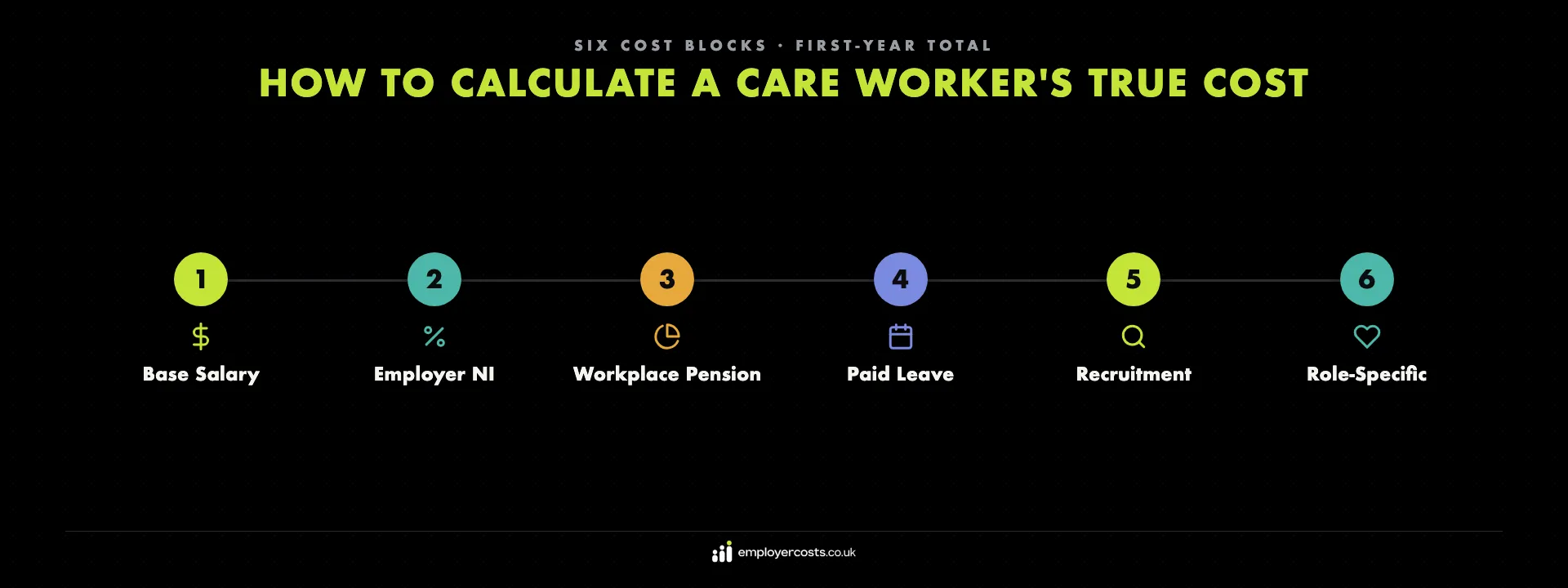
| Base salary | annual gross pay of £23,000 to £26,000 for most care roles, set by the hourly rate and contracted hours. |
|---|---|
| Employer National Insurance | 15% of earnings above the £5,000 secondary threshold. |
| Workplace pension | the minimum 3% employer contribution on qualifying earnings of £6,240 to £50,270. |
| Paid leave | the statutory 5.6 weeks of holiday, plus any Statutory Sick Pay exposure. |
| Recruitment | an enhanced DBS check of £49.50 for a direct hire, agency fees of 15% to 25% of salary, or overseas sponsorship fees. |
| Role-specific spend | Care Certificate training and travel reimbursement for domiciliary staff, plus any night or weekend shift premiums. |
Adding these six components gives the complete first-year cost of employing a care worker. Put a specific care worker's pay through our True Cost of Employee Calculator for the exact annual and monthly figure.
What Does a Care Worker on £22,000 Cost in Total?
A care worker on a £22,000 base salary costs approximately £30,000 to £32,000 in the first year through the agency-recruitment route. That total combines the £22,000 salary, statutory on-costs of about £3,000 in employer National Insurance and pension, agency recruitment of £3,300 to £4,400, and role-specific spend of £1,500 to £2,000 on training and travel. A direct hire that swaps the agency fee for a £49.50 DBS check pulls the total down toward £27,000.
Is It Cheaper to Hire a Care Worker Through an Agency or Directly?
Hiring a care worker directly is cheaper than using an agency for a permanent post. Direct employment avoids the agency placement fee of 15% to 25% of salary, though it shifts payroll, DBS checks, and compliance in-house. An agency handles that administration and supplies pre-vetted staff, which suits short-notice or temporary cover but carries the fee premium. The choice turns on whether the provider values the lower cost of direct hiring or the speed and continuity an agency delivers.
How Do Care Worker Costs Compare Across the Care Sector?
Care worker costs sit at the lower end of the care sector's pay range. The median independent-sector care worker earns £12.60 an hour, close to the National Living Wage and below the rate for NHS healthcare assistants on Agenda for Change bands. Registered nurses and specialist dementia-care staff cost more again, which leaves the frontline care worker as the sector's most cost-efficient role. Annual pay of £23,000 to £26,000 reflects that entry-to-mid position in the wider care workforce.
How Can You Reduce the Cost of Hiring a Care Worker?
The cost of hiring a care worker falls through several practical levers, listed below:
- Improve retention: fair pay, career progression, and flexible shifts cut the turnover that drives repeat recruitment and training spend.
- Recruit directly: local job boards and community networks avoid the 15% to 25% agency fee.
- Optimise training: subsidised or in-house Care Certificate delivery cuts external training costs of £150 to £300 per worker.
- Schedule efficiently: routing that trims travel time and avoids unnecessary night and weekend premiums lowers mileage and wage spend.
- Use funded support: apprenticeship-levy funding covers training costs, and better pay progression lifts retention without raising headline pay.
Applied together, these levers pull the first-year cost of a care worker down by £2,000 to £4,000, which returns the saving straight to the total cost of the hire while holding care quality steady.