
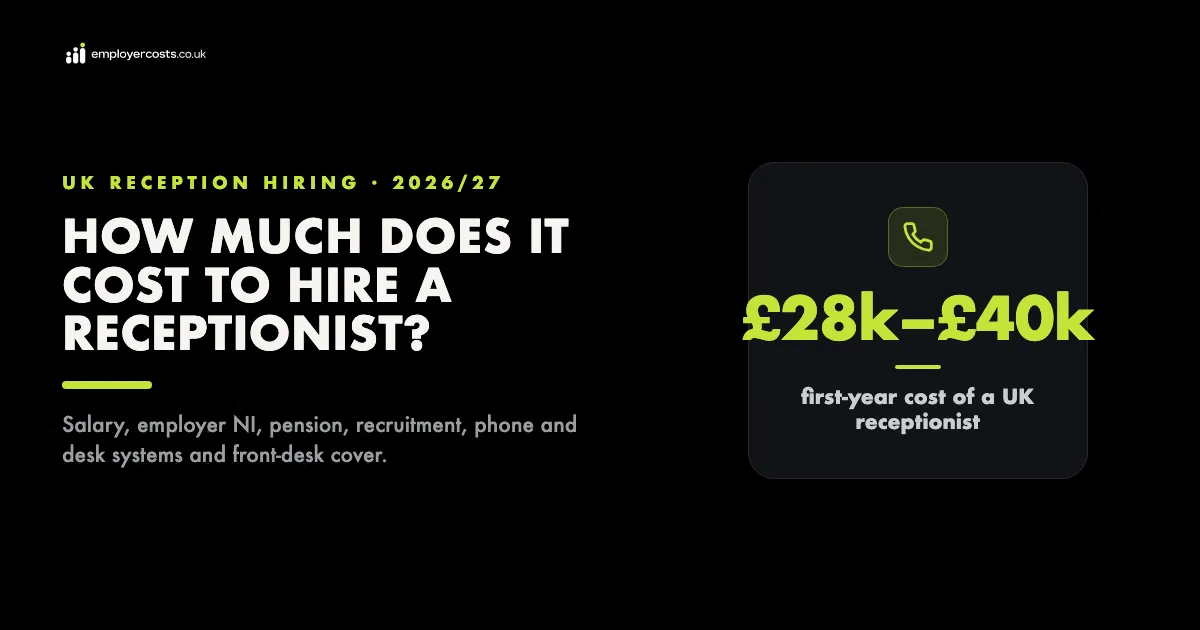
The total first-year cost of hiring a receptionist in the UK ranges from £28,000 to £40,000. The cost of hiring a receptionist combines the base salary, statutory on-costs, recruitment spend, and role-specific expenditure. Statutory employment costs cover employer National Insurance, workplace pension contributions, and paid leave. Recruitment spend covers agency fees and job advertising, while role-specific budget lines pay for phone and desk systems and all-hours front-desk cover.
True Cost of Employee Calculator
Enter a salary to see the full employer cost for 2026/27 — salary plus employer National Insurance, workplace pension and other on-costs.
The Employee
True Annual Cost
—
Enter a salary to see the breakdown.
Estimates only — verify with HMRC or a qualified accountant. Open the full calculator →
Two variables move a receptionist's total cost more than any other: sector and location. A receptionist in legal, financial, or healthcare settings carries higher pay than a general-office hire, and a London receptionist costs more than a regional one. Working these variables through alongside the base salary produces the true first-year cost for a specific hire, broken down in full in the first section below.
What Is the Total Cost of Hiring a Receptionist in the UK?
The total cost of hiring a full-time receptionist in the UK is £28,000 to £40,000 in the first year. The first-year total combines base salary, statutory employment costs, recruitment spend, and role-specific investment, which together push the cost of a receptionist well above the headline salary, according to "How much does an employee really cost UK employers in 2026?" published by PayFit, November 2025. Base pay for a receptionist sits between £22,000 and £28,000, and statutory on-costs such as employer National Insurance and workplace pension add roughly 15% to 18% of salary.

Recruitment spend adds £200 to £5,600, depending on whether the vacancy is filled through advertising or an agency placement. Role-specific costs such as phone and desk systems contribute another £500 to £2,000 in the first year. Location and sector move the total most: a London or professional-services receptionist sits at the upper end on both salary and on-costs, while a general-office hire sits nearer the floor. Staffing a front desk across shifts? Our Team Cost Planner totals pay and on-costs across every seat.
What Is the Average Receptionist Salary in the UK?
The average receptionist salary in the UK is £22,000 to £28,000 per year. Entry-level receptionists start near £22,000, while experienced front-desk staff and those in legal, financial, or healthcare settings earn toward the upper end and beyond. Glassdoor puts the average receptionist salary at approximately £24,300, with London and specialist sectors lifting the figure above the national midpoint.
How Much Does a Receptionist Cost Above Their Salary?
A receptionist costs an additional 15% to 20% above base salary in statutory on-costs alone. Employer National Insurance, workplace pension contributions, and statutory paid leave make up that on-cost layer. Once recruitment fees, equipment, and training join the calculation, the added cost above salary reaches 30% to 45% of base pay. Setting the statutory on-cost layer straight first keeps the wider budget accurate, so the mandatory components come next.
What Employment Costs Do You Pay on a Receptionist's Salary?
Three statutory employment costs sit on top of a receptionist's base salary: employer National Insurance, workplace pension contributions, and paid leave. Employer National Insurance applies to earnings above the secondary threshold, the workplace pension follows auto-enrolment minimums, and paid leave covers the statutory 5.6 weeks of annual holiday plus Statutory Sick Pay exposure. Each mandatory cost is worked through in turn below.
How Much Employer National Insurance Do You Pay for a Receptionist?
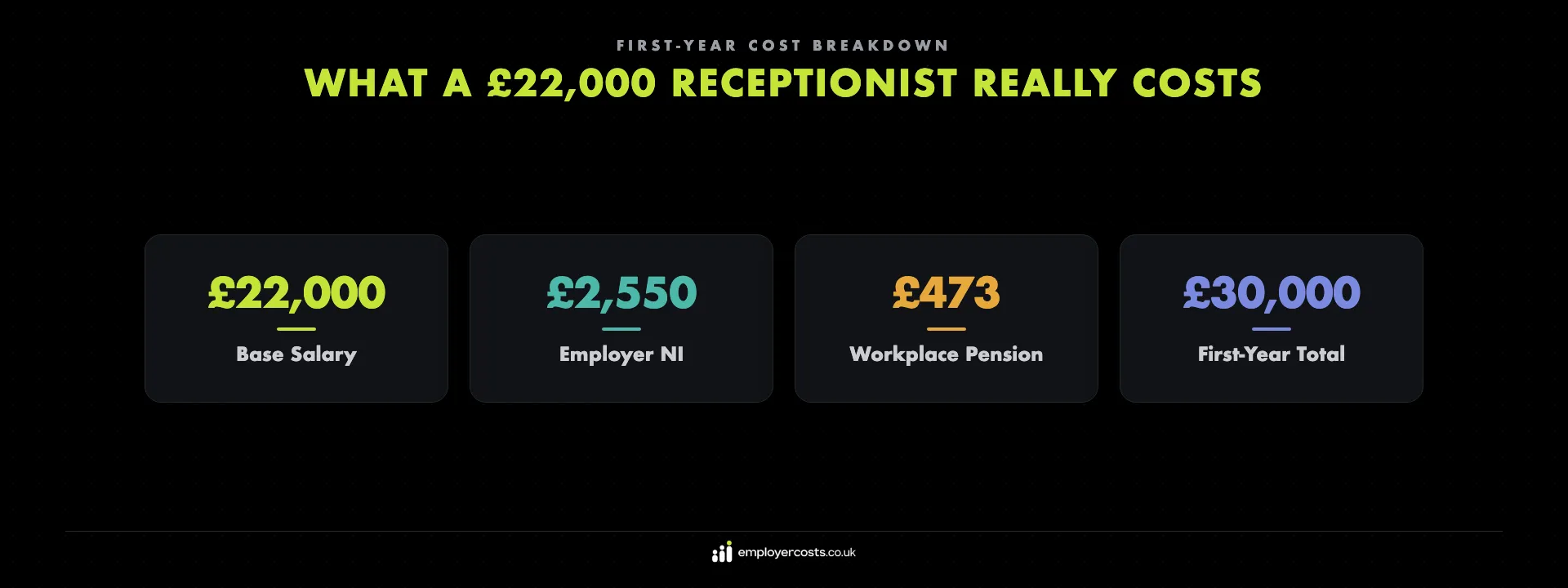
Employer National Insurance for a receptionist is charged at 15% on earnings above the £5,000 secondary threshold for the 2026/27 tax year, a rate published by GOV.UK in "Rates and thresholds for employers 2026 to 2027." A receptionist earning £22,000 a year passes £17,000 above the threshold, so the employer National Insurance bill reaches £2,550 for the year. The employer NI charge rises in step with pay, so a higher salary lifts this line before pension and leave are added.
How Much Workplace Pension Do You Pay for a Receptionist?
The minimum employer workplace pension for a receptionist is 3% of qualifying earnings, the band between £6,240 and £50,270. A receptionist earning £22,000 produces qualifying earnings of £15,760, so the employer pension contribution reaches approximately £473 a year. Many employers pay above the 3% floor to stay competitive when attracting and keeping front-desk staff.
How Much Holiday and Sick Pay Does a Receptionist Cost?
A receptionist is entitled to 5.6 weeks of paid annual leave, or 28 days for a full-time role. Holiday pay is already carried inside the salary and represents about 12.07% of hours worked. Statutory Sick Pay adds a separate exposure of £123.25 per week for the 2026/27 tax year, payable from the fourth qualifying day for up to 28 weeks. Front-desk absence can also carry a cover cost, since the desk needs staffing through temporary help or overtime while the receptionist is away.
How Much Does It Cost to Recruit a Receptionist?
Recruiting a receptionist carries two main costs: recruitment agency fees and job advertising. Agency fees buy candidate sourcing, screening, and shortlisting, while advertising covers the job-board listings that attract direct applicants. Both routes are set out below.
What Do Recruitment Agencies Charge for a Receptionist?
Recruitment agencies charge 15% to 20% of a receptionist's first-year salary for a permanent placement, within the wider 10% to 30% band UK agencies apply, according to "What Are Average Recruitment Agency Fees in the UK?" published by Get Staffed, 2022. A receptionist on £22,000 therefore generates an agency fee of £3,300 to £4,400. The percentage sits at the lower end of the recruitment range because a receptionist is a junior administrative role, rising toward 25% only for specialist or executive front-desk posts. The fee band reflects the standing UK benchmark for permanent administrative placements.
How Much Does Advertising a Receptionist Vacancy Cost?
Advertising a receptionist vacancy costs £0 to £300, set by the platform and the listing type. Basic postings on major boards such as Indeed and Reed can run free, while a standard paid listing costs £75 to £150 plus VAT. Sponsored listings that lift visibility and speed up the hire run £75 to £300, and multi-post packages cut the per-listing cost for employers advertising several roles. The final figure tracks the urgency of the hire and how much reach the vacancy needs.
What Receptionist-Specific Costs Should You Budget For?
Beyond salary and statutory on-costs, a receptionist needs a phone and desk setup and, in many businesses, cover for the hours the main desk is unstaffed. Phone and desk systems equip the receptionist to handle calls and visitors, and all-hours cover keeps the front desk answered outside core hours. Both role-specific lines are set out below.
How Much Do Phone and Desk Systems Cost per Receptionist?
Phone and desk systems for a receptionist cost £500 to £2,000 in the first year, set by whether the business runs traditional hardware or a cloud service. A basic desk phone with line rental starts at £10 to £20 a month, or £120 to £240 a year, while a VoIP or unified-communications platform with call routing and voicemail-to-email runs £50 to £100 a month. The physical desk setup, including a computer and monitor, adds £300 to £800 as an initial outlay. Cloud phone systems suit hybrid or remote reception cover by removing on-premise hardware, though high call volumes push per-user licensing higher.
How Much Does Covering the Front Desk at All Hours Cost?
Covering the front desk at all hours costs from a few hundred pounds a month up to £15,000 a month, set by whether the cover is outsourced or staffed in-house. Round-the-clock in-house cover needs four to five full-time employees to span shifts, statutory leave, and sick days, which pushes the monthly figure above £15,000. A virtual receptionist service delivers the same answered-line cover for £420 to £900 a month, set by call volume and features. The outsourced route trades the fixed cost of extra headcount for a flexible monthly fee.
What Factors Change the Cost of Hiring a Receptionist?
Two variables reshape a receptionist's total cost: sector and location. Sector sets the salary and the specialist experience a role demands, while location applies a regional pay premium. Each factor is examined below.
How Does Sector Change a Receptionist's Cost?
Sector changes a receptionist's cost through salary and the level of experience a role demands. In client-facing industries such as financial services, law firms, and healthcare, a receptionist commands higher pay for the specialist knowledge and polish the front desk needs. Those sectors compete for candidates with industry experience, which lifts both base salary and recruitment cost. A general-office or small-business receptionist carries lower pay expectations and fewer specialist requirements, which pulls the total down. Premium sectors also invest more in phone systems, security, and extended cover, which adds again to the role-specific spend.
Does It Cost More to Hire a Receptionist in London?
Yes, hiring a receptionist in London costs more than in other UK regions. A London receptionist earns roughly £28,000 to £42,000, against £23,000 to £32,000 outside the capital, which lifts every salary-linked on-cost with it. Applying that London pay premium to the base salary and adding the standard on-costs, recruitment spend, and setup produces the exact figure for a specific London hire.
How Do You Calculate the True Cost of Employing a Receptionist?
The true cost of employing a receptionist is the sum of five components, worked in order:
| Base salary | the annual gross pay, £22,000 to £28,000 for most UK receptionist roles and higher in London. |
|---|---|
| Statutory employment costs | employer National Insurance at 15% above the £5,000 threshold, the 3% workplace pension on qualifying earnings, and statutory holiday and sick pay. |
| Recruitment | agency fees of 15% to 20% of first-year salary, or advertising costs of £0 to £300. |
| Role-specific spend | phone and desk systems of £500 to £2,000, plus any all-hours front-desk cover. |
| Onboarding and location | initial training and equipment, adjusted for the sector and regional pay premium that apply to the role. |
Adding these five components gives the complete first-year cost of employing a receptionist. Enter any salary into our True Cost of Employee Calculator to see the full annual and monthly cost in seconds.
What Does a Receptionist on £22,000 Cost in Total?
A receptionist on a £22,000 base salary costs approximately £27,000 to £30,000 in the first year. That total combines the £22,000 salary, employer National Insurance of £2,550, a workplace pension contribution of about £473, agency recruitment of £3,300 to £4,400, and phone and desk setup of £500 to £2,000. Filling the role through advertising instead of an agency pulls the total toward the lower bound.
How Much Does a Part-Time Receptionist Cost?
A part-time receptionist costs a pro-rata share of the full-time figure, set by contracted hours. A 20-hour week works out at roughly £14,000 to £17,500 a year, covering a scaled base salary and the statutory on-costs of employer National Insurance, pension, and holiday. Fixed costs such as the phone and desk setup do not fall with hours, so the cost per hour of a part-time receptionist runs higher than the full-time equivalent.
Is a Virtual Receptionist Cheaper Than Hiring a Receptionist?
Yes, a virtual receptionist is cheaper than an in-house receptionist for call-handling cover. Virtual receptionist services run £25 to £900 a month by call volume and service level, against £28,000 to £40,000 a year for an employed receptionist. The saving comes from removing salary, employer National Insurance, workplace pension, and office overhead, though a virtual service suits call and message handling rather than in-person front-desk duties.
How Can You Reduce the Cost of Hiring a Receptionist?
The cost of hiring a receptionist falls through several practical levers, listed below:
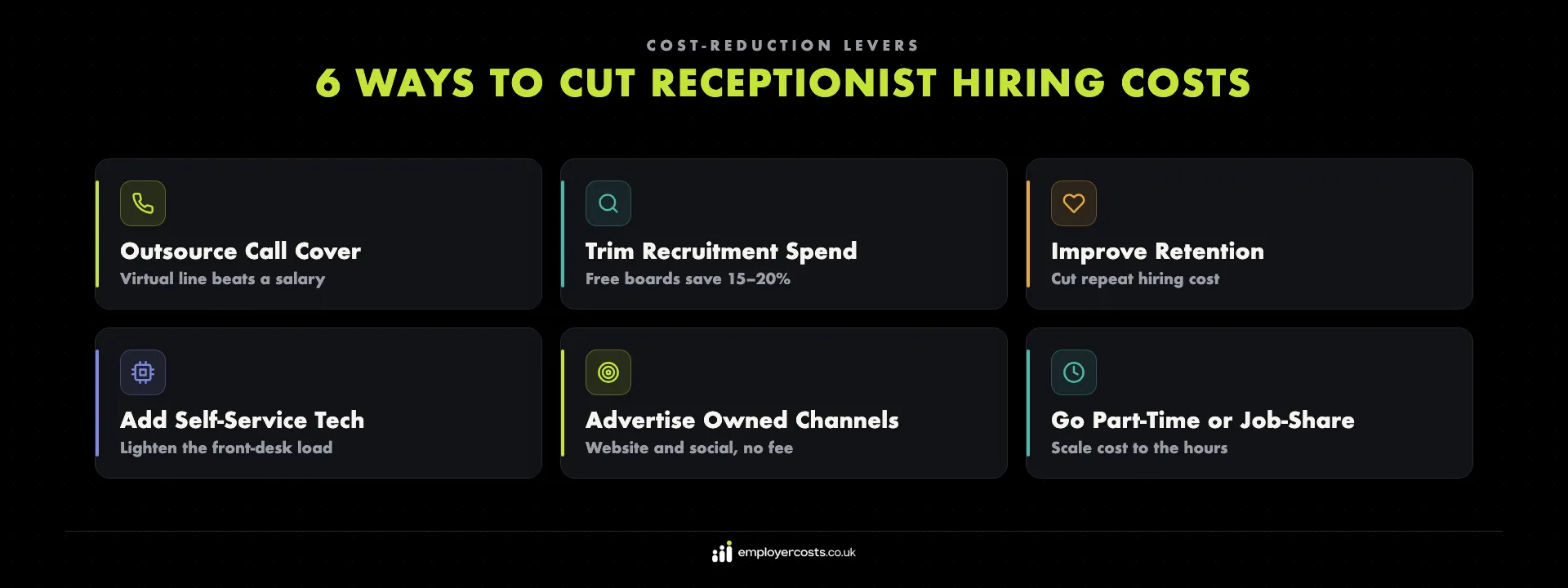
- Outsource call cover: a virtual or automated answering service handles calls for a monthly fee well below a full salary.
- Trim recruitment spend: free job boards and employee referrals cut the 15% to 20% agency fee.
- Improve retention: flexible schedules and clear progression reduce the turnover that drives repeat recruitment cost.
- Add self-service technology: automated phone menus and online booking lighten the front-desk load and the cover it needs.
- Advertise through owned channels: a company website and social media attract candidates without paid advertising cost.
- Consider part-time or job-share: reduced hours cut salary and statutory on-costs where full-time cover is not needed.
Applied together, these levers pull the first-year cost of a receptionist down while holding front-desk quality steady, which returns the saving straight to the total cost of the hire.