
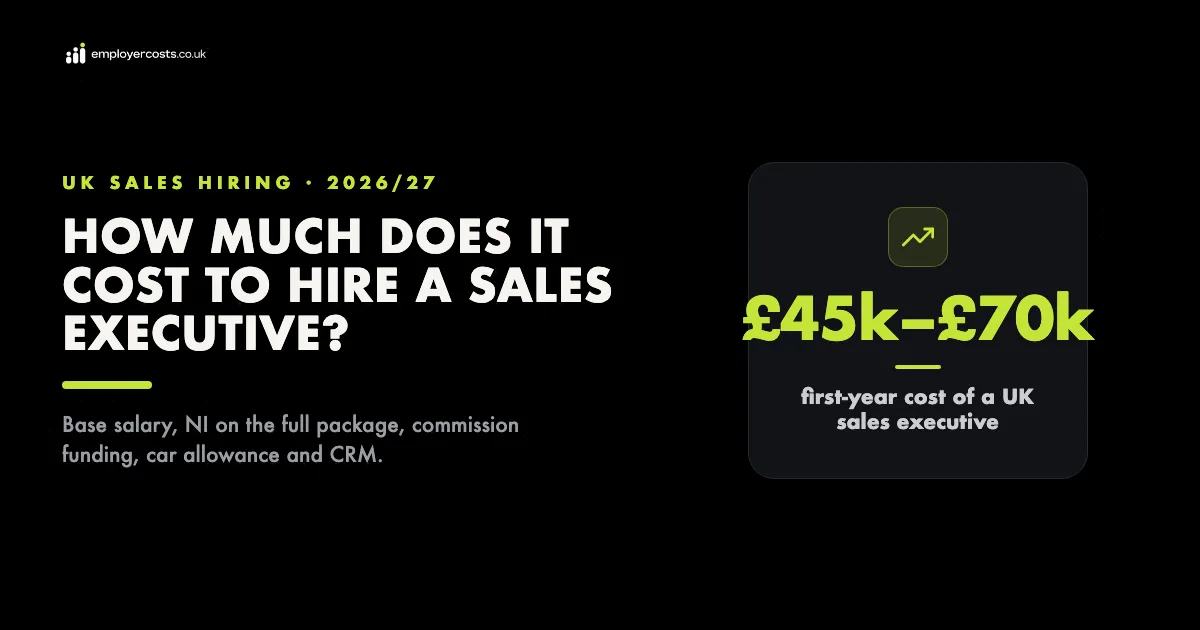
The total first-year cost of hiring a sales executive in the UK ranges from £45,000 to £70,000. The cost of hiring a sales executive combines the base salary, statutory on-costs, recruitment spend, and role-specific expenditure. Statutory employment costs cover employer National Insurance on the full remuneration package, including commission, and the minimum workplace pension contribution. Recruitment spend adds agency fees of 20% to 25% of first-year salary, plus the risk cost of a bad hire, which runs to several times the salary in lost productivity and re-recruitment.
True Cost of Employee Calculator
Enter a salary to see the full employer cost for 2026/27 — salary plus employer National Insurance, workplace pension and other on-costs.
The Employee
True Annual Cost
—
Enter a salary to see the breakdown.
Estimates only — verify with HMRC or a qualified accountant. Open the full calculator →
Employers also fund role-specific costs that sit above the base pay: commission at target, a car allowance, and CRM seats. Commission funding accounts for 20% to 40% of the on-target earnings package, a car allowance runs £3,000 to £6,000 a year, and CRM and sales tools add £180 to £1,200 per seat. Two variables move a sales executive's total most: the OTE structure, which sets the split between base and commission, and location, where London roles carry a 15% to 25% pay premium. Working these elements through alongside the base salary produces the true first-year cost for a specific hire, broken down in full in the first section below.
What Is the Total Cost of Hiring a Sales Executive in the UK?
The total cost of hiring a sales executive in the UK is £45,000 to £70,000 in the first year. The first-year total combines base salary, statutory employment costs, recruitment spend, commission funding, and role-specific investment. Base pay sits between £25,000 and £40,000 for most sales executives, and statutory on-costs such as employer National Insurance and workplace pension add roughly 15% to 18% of the package.
Recruitment spend adds agency fees of 20% to 25% of salary, while commission funding, a car allowance, and CRM seats lift the total well above the headline pay, according to "How much does an employee really cost UK employers in 2026?" published by PayFit, November 2025. The mix shifts with experience, location, and the OTE structure, which is why a sales executive's fully-loaded cost spans a wide band rather than a single figure. Costing a whole sales team? Our Team Cost Planner totals base, commission and on-costs across every rep.
What Is the Average Sales Executive Salary in the UK?
The average sales executive salary in the UK is £25,000 to £40,000 in base pay, set by experience and sector. Entry-level sales executives start near £25,000, while experienced executives earn above £40,000, and Reed reports an average of around £35,800 across the role in its "Average Sales Executive Salary in the UK" data. On-target earnings run higher again once commission is added, commonly reaching £45,000 to £60,000 for a mid-level executive on a typical split. Base pay alone understates the cost of the role, since commission funding forms a large part of the total package.
How Much Does a Sales Executive Cost Above Their Base Salary?
A sales executive costs an additional 15% to 20% above base salary in statutory on-costs, before commission and role-specific spend. Employer National Insurance and workplace pension contributions make up that mandatory layer. A sales executive on £28,000 therefore carries roughly £4,100 in statutory on-costs, rising once commission joins the earnings that National Insurance applies to. Setting the statutory layer straight first keeps the wider budget accurate, so the mandatory components come next.
What Employment Costs Do You Pay on a Sales Executive's Pay?
Two statutory employment costs sit on top of a sales executive's pay: employer National Insurance and workplace pension contributions. Employer National Insurance applies to the full earnings above the secondary threshold, base and commission alike, while the workplace pension follows auto-enrolment minimums. Both mandatory costs are worked through below.
How Much Employer National Insurance Do You Pay for a Sales Executive?
Employer National Insurance for a sales executive is charged at 15% on earnings above the £5,000 secondary threshold for the 2026/27 tax year, a rate published by GOV.UK in "Rates and thresholds for employers 2026 to 2027." A sales executive on a £28,000 base salary passes £23,000 above the threshold, so the employer National Insurance bill on base pay reaches £3,450 for the year. The charge applies to the whole remuneration package, so commission and bonuses lift the employer National Insurance liability alongside the base salary.
Do Employers Pay National Insurance on Sales Commission?
Yes, employers pay National Insurance on sales commission. Commission counts as Class 1 employment earnings, so employer National Insurance at 15% applies to it above the £5,000 secondary threshold, the same as base salary. A sales executive who earns £10,000 in commission on top of base pay therefore adds £1,500 to the employer National Insurance bill. Employers factor this charge into commission-heavy packages when they cost out a sales hire. Routing part of a package through salary sacrifice trims the National Insurance on the sacrificed amount.
How Much Workplace Pension Do You Pay for a Sales Executive?
The minimum employer workplace pension for a sales executive is 3% of qualifying earnings, the band between £6,240 and £50,270. A sales executive on £28,000 produces qualifying earnings of £21,760, so the employer pension contribution reaches approximately £653 a year. Where commission counts as pensionable pay under the scheme rules, the contribution rises with the total earnings, so a commission-heavy package carries a higher pension cost than the base salary alone suggests.
How Much Does It Cost to Recruit a Sales Executive?
Recruiting a sales executive carries two main costs: agency placement fees and the risk cost of a bad hire. Agency fees run 20% to 25% of first-year salary, or £5,600 to £7,000 for a mid-level executive on £28,000. A mis-hire costs far more again, which is why sales recruitment weighs the fee against the price of getting it wrong. Both are set out below.
What Do Sales Recruitment Agencies Charge?
Sales recruitment agencies charge 20% to 25% of a sales executive's first-year salary for a permanent placement, within the wider 10% to 30% band UK agencies apply, according to "What Are Average Recruitment Agency Fees in the UK?" published by Get Staffed, 2022. A sales executive on £28,000 therefore generates an agency fee of £5,600 to £7,000. Senior or retained sales searches reach 30%, and most contingent placements carry a rebate period of 8 to 12 weeks if the hire leaves early. The sales band sits above general commercial recruitment because sales talent is harder to source and drives revenue directly.
How Much Does a Bad Sales Hire Cost?
A bad sales hire costs the business far more than the salary it pays. REC research in its "Perfect Match" report puts the cost of a poor hire at mid-manager level, on a £42,000 salary, at more than £132,000 once lost productivity, wasted training, and re-recruitment are counted. A sales role compounds that figure through missed revenue targets and lost deals across the vacant and ramp-up periods. A mis-hire who leaves inside the first year also writes off the recruitment fee and the commission runway invested in them, which makes careful screening the cheaper path.
What Sales-Specific Costs Should You Budget For?
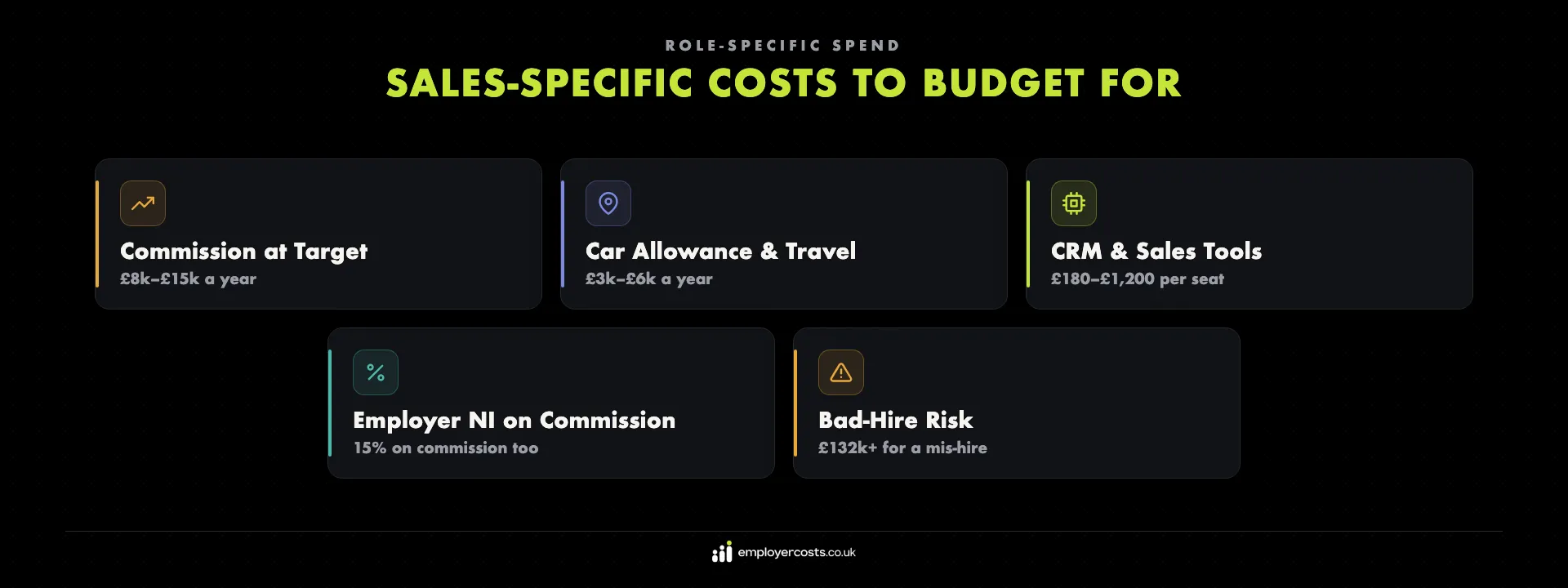
Beyond salary and statutory on-costs, a sales executive needs commission funding, travel cover, and sales tooling before the role pays back. The main sales-specific lines are commission and bonus funding, a car allowance and travel, and CRM and sales-tool seats. Each is set out below.
How Much Do Commission and Bonus Schemes Cost to Fund?
Commission and bonus schemes for a sales executive cost £8,000 to £15,000 a year to fund at target. The commission sits inside the on-target earnings package and forms 20% to 40% of total compensation, set by the role and the sector. A sales executive on a £25,000 base with a typical split needs a commission budget of roughly £10,000 to £16,000 at 100% of quota. An uncapped scheme raises the ceiling further, so a strong performer earns and costs more than the on-target figure.
How Much Do Car Allowances and Travel Cost per Sales Executive?
Car allowances and travel cost £3,000 to £6,000 per sales executive a year. A monthly car allowance of £250 to £500 covers personal-vehicle use for business and forms a taxable addition to pay. Mileage reimbursement adds to that at the HMRC-approved rate of 45p per mile for the first 10,000 business miles and 25p after. The total travel cost tracks the size of the sales territory and how often the executive visits clients in person.
How Much Do CRM and Sales Tools Cost per Seat?
CRM and sales tools cost £10 to £60 per user per month for a sales executive. Entry-level systems such as Zoho CRM and Freshsales start near £7 to £12 per user a month, mid-tier platforms such as Pipedrive and HubSpot sit around £15 to £25 a seat, and Salesforce runs £20 to over £60 per user with advanced features. Across a year, a CRM seat costs £180 to £1,200, covering pipeline management, reporting, and mobile access that the role depends on.
What Factors Change the Cost of Hiring a Sales Executive?
Two variables reshape a sales executive's total cost: the OTE structure and location. The OTE structure sets the split between fixed base pay and variable commission, while location applies a regional pay premium. Each factor is examined below.
How Does OTE Structure Change a Sales Executive's Cost?
The OTE structure changes a sales executive's cost by setting the balance between fixed base pay and variable commission. A 70/30 split puts 70% in base salary and 30% in commission, which pays out only when the executive hits target and ties cost to performance. A commission-heavy split lowers the fixed cost but raises the payout when targets are exceeded, while a base-heavy split gives predictable cost at a higher guaranteed salary. The chosen split therefore drives both the budget and the risk an employer carries on a sales hire.
Does It Cost More to Hire a Sales Executive in London?
Yes, hiring a sales executive in London costs more than in other UK regions. London sales executives command base salaries 15% to 25% above the national average, with higher recruitment fees and travel allowances on top. Those premiums push the first-year cost £8,000 to £15,000 above a regional hire. Applying the London premium to the base pay and adding the standard on-costs, commission funding, and recruitment produces the exact figure for a specific London hire.
How Do You Calculate the True Cost of Employing a Sales Executive?
The true cost of employing a sales executive is the sum of seven components, worked in order:
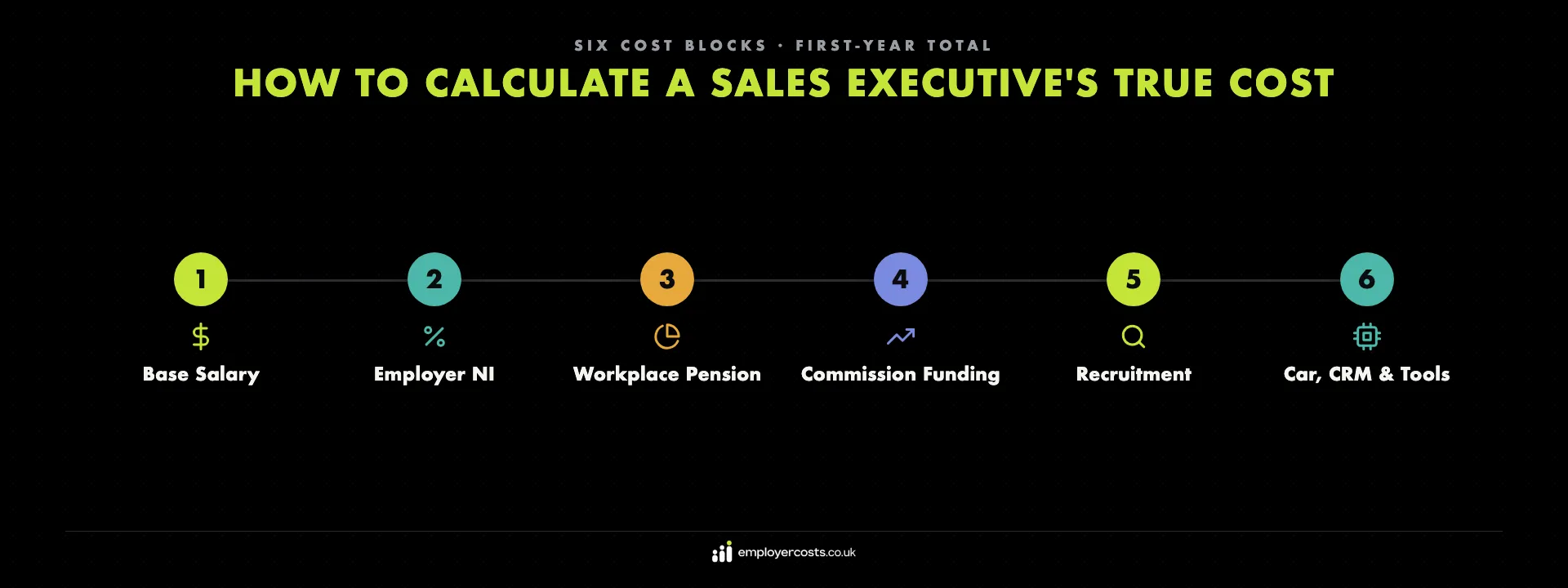
| Base salary | the agreed annual base pay, £25,000 to £40,000 for most sales roles. |
|---|---|
| Employer National Insurance | 15% of total earnings above the £5,000 secondary threshold, base and commission alike. |
| Workplace pension | the minimum 3% employer contribution on qualifying earnings of £6,240 to £50,270. |
| Commission funding | the on-target commission budget, 20% to 40% of the package. |
| Recruitment | agency fees of 20% to 25% of salary, or internal hiring cost. |
| Role-specific spend | a car allowance of £3,000 to £6,000, CRM seats of £180 to £1,200, and sales tools. |
| Onboarding and ramp-up | initial training and the reduced-productivity period before the executive reaches quota. |
Adding these seven components gives the complete first-year cost of employing a sales executive. Enter a base and commission split into our True Cost of Employee Calculator to see the full annual and monthly cost in seconds.
What Does a Sales Executive on £28,000 Cost in Total?
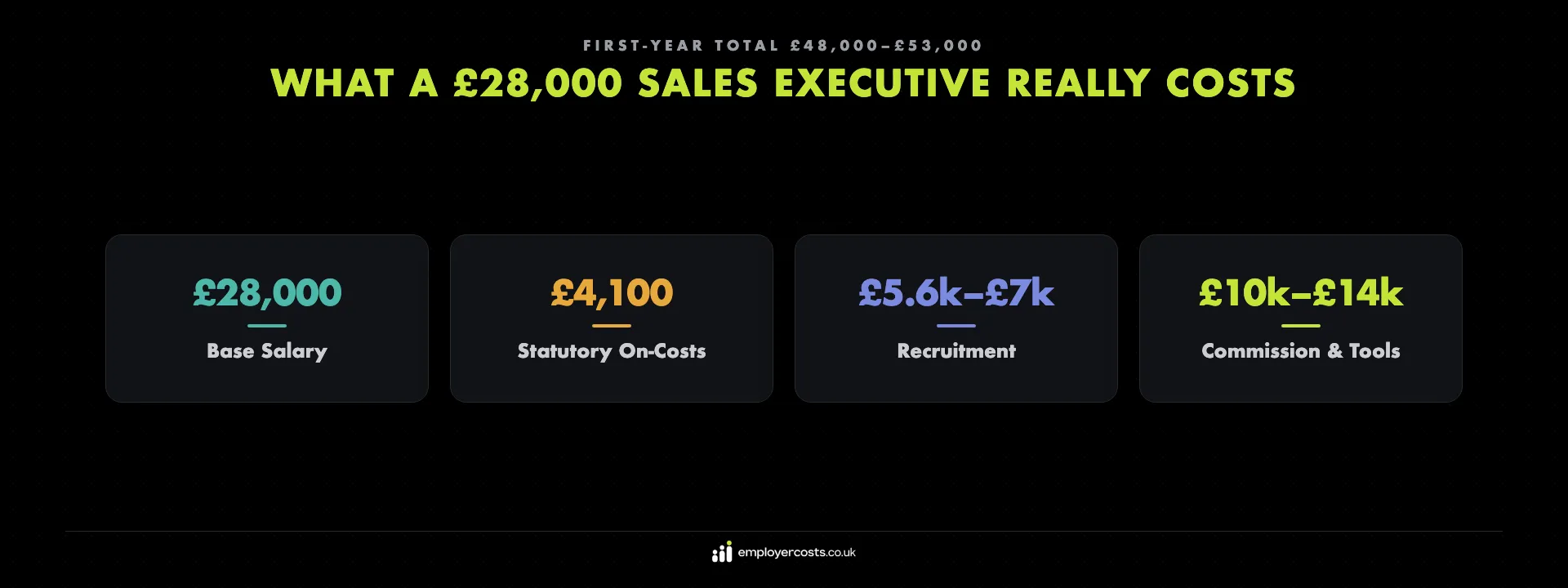
A sales executive on a £28,000 base salary costs approximately £48,000 to £53,000 in the first year. That total combines the £28,000 salary, statutory on-costs of about £4,100 in employer National Insurance and pension, agency recruitment of £5,600 to £7,000, and role-specific spend of £10,000 to £14,000 on commission funding, a car allowance, and CRM seats. Commission funding drives most of the gap between base pay and the fully-loaded cost.
Is It Cheaper to Use Self-Employed Sales Agents Than Hire a Sales Executive?
Self-employed sales agents cost less in fixed overhead than an employed sales executive, but not always less overall. A commission-only agent carries no base salary, employer National Insurance, or workplace pension, which suits a small business with a tight budget. Agents charge higher commission rates in return, which erodes the saving on high-volume sales, and an employed sales executive gives more control, stability, and team integration for long-term growth. Whether an agent counts as employed or self-employed for tax turns on IR35, which shifts the true cost of the arrangement.
How Can You Reduce the Cost of Hiring a Sales Executive?
The cost of hiring a sales executive falls through several practical levers, listed below:
- Widen recruitment channels: LinkedIn, employee referrals, and niche job boards cut the 20% to 25% agency fee.
- Screen harder up front: skills assessments and structured interviews reduce the risk of a costly mis-hire.
- Sharpen the job description: a clear, targeted spec draws qualified candidates without heavy paid advertising.
- Match the tool to the need: a right-sized CRM avoids paying for enterprise features a small team never uses.
- Invest in retention: training and clear progression cut the turnover that drives repeat recruitment cost.
- Offer flexible work: remote or hybrid roles widen the talent pool and can moderate salary expectations.
Applied together, these levers pull the first-year cost of a sales executive down while holding the quality of hire steady, which returns the saving straight to the total cost of the hire.