
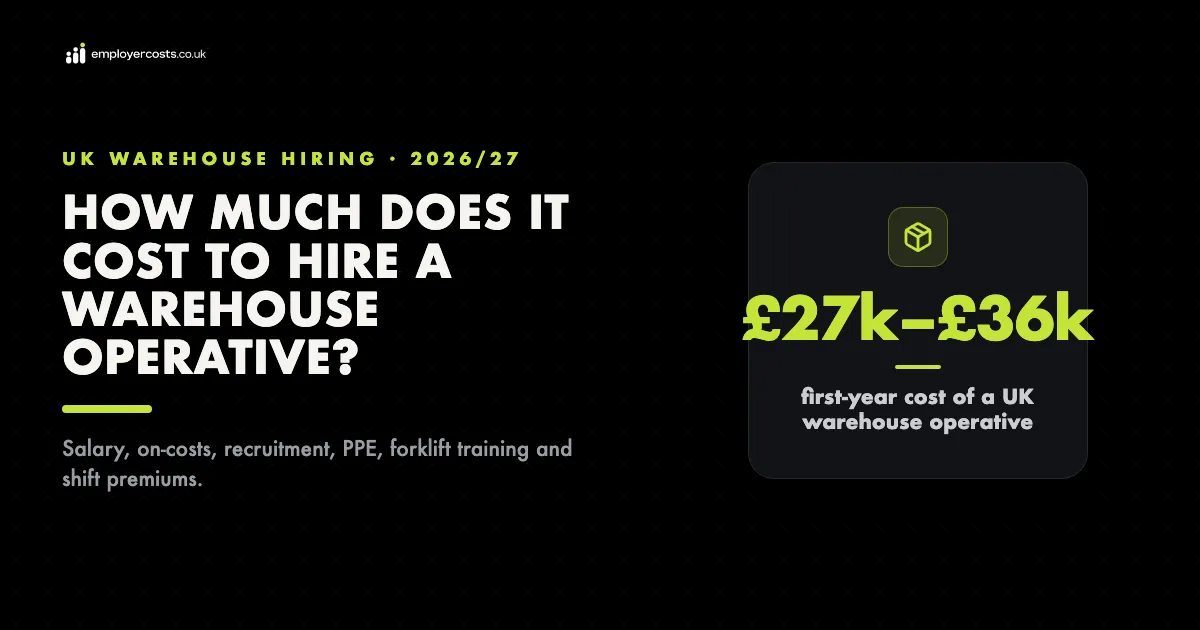
The total first-year cost of hiring a warehouse operative in the UK ranges from £27,000 to £36,000. The cost of hiring a warehouse operative combines the base salary, statutory on-costs, recruitment spend, and role-specific expenditure. Statutory employment costs cover employer National Insurance, workplace pension contributions, and paid leave, which add roughly 15% to 20% to the gross salary.
True Cost of Employee Calculator
Enter a salary to see the full employer cost for 2026/27 — salary plus employer National Insurance, workplace pension and other on-costs.
The Employee
True Annual Cost
—
Enter a salary to see the breakdown.
Estimates only — verify with HMRC or a qualified accountant. Open the full calculator →
Recruitment spend adds agency fees of 15% to 20% of annual salary for a permanent hire, or advertising costs of £200 to £400 per vacancy. Role-specific budget lines pay for personal protective equipment and workwear at £100 to £300, forklift training at £150 to £400, and shift premiums that add 10% to 30% to the hourly rate for unsocial hours. Two variables move a warehouse operative's total most: seasonal demand peaks, which lift pay and recruitment fees, and contract type, where temporary staff carry higher hourly rates than permanent hires. Working these elements through alongside the base salary produces the true first-year cost for a specific hire, broken down in full in the first section below.
What Is the Total Cost of Hiring a Warehouse Operative in the UK?
The total cost of hiring a warehouse operative in the UK is £27,000 to £36,000 in the first year. The first-year total combines base salary, statutory employment costs, recruitment spend, and role-specific investment, which together lift the cost of a warehouse operative well above the headline salary, according to "How much does an employee really cost UK employers in 2026?" published by PayFit, November 2025. Base pay sits between £22,000 and £26,000 for most warehouse operatives, and statutory on-costs such as employer National Insurance and workplace pension add roughly 15% to 20% of salary.

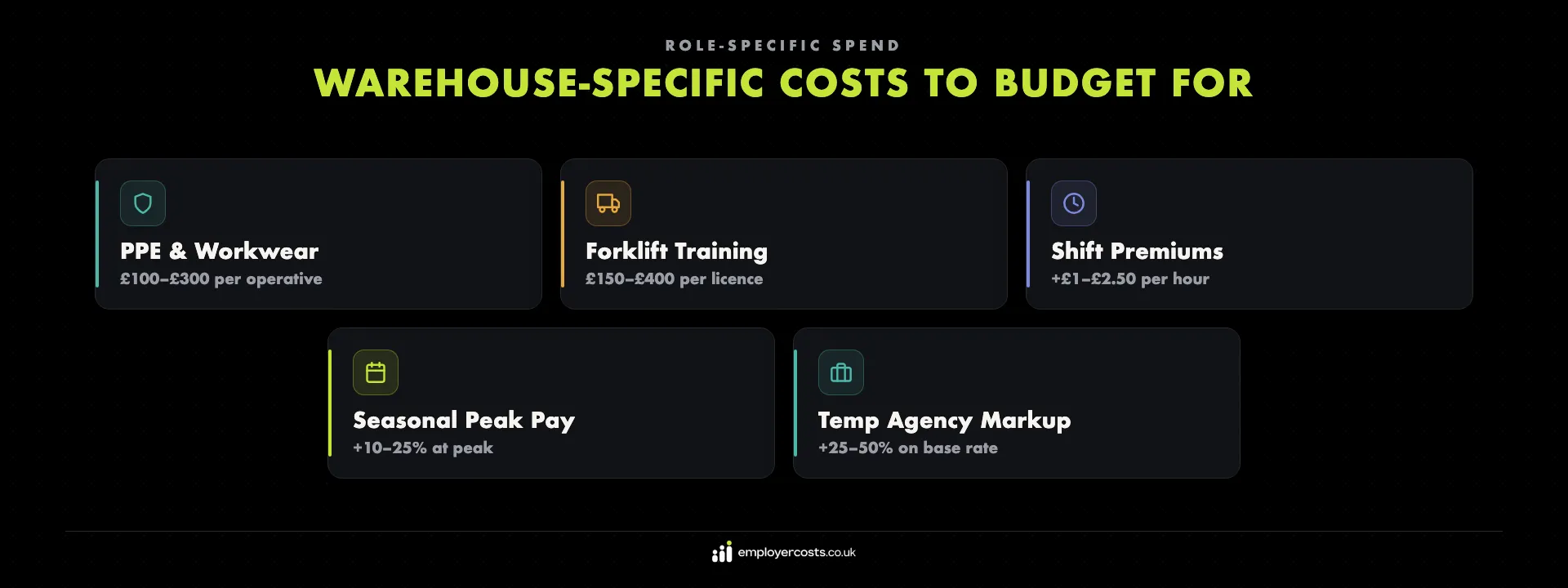
Recruitment spend swings the total: advertising a vacancy runs £200 to £400, while an agency placement adds 15% to 20% of salary. Role-specific costs bring personal protective equipment and workwear at £100 to £300, forklift training at £150 to £400 where the role needs it, and shift premiums of £1 to £2.50 an hour for night work. Seasonal peaks and a preference for temporary contracts push the figure toward the upper end.
What Is the Average Warehouse Operative Salary in the UK?
The average warehouse operative salary in the UK is £22,000 to £26,000 per year, the range Reed reports in its "Average Warehouse Operative Salary in the UK" data. Entry-level operatives start near the National Living Wage, which produces roughly £24,800 a year at full-time hours, while experienced or forklift-certified operatives reach the upper end. Warehouse operative pay tracks experience, industry sector, and location, with London and major logistics hubs paying above the national figure.
How Much Does a Warehouse Operative Cost Above Their Salary?
A warehouse operative costs an additional 15% to 20% above base salary in statutory on-costs. Employer National Insurance, workplace pension contributions, and statutory paid leave make up that on-cost layer. A warehouse operative earning £24,000 therefore carries roughly £3,400 in statutory on-costs before recruitment or role-specific spend. Setting the statutory on-cost layer straight first keeps the wider budget accurate, so the mandatory components come next.
What Employment Costs Do You Pay on a Warehouse Operative's Salary?
Three statutory employment costs sit on top of a warehouse operative's base salary: employer National Insurance, workplace pension contributions, and paid leave. Employer National Insurance applies to earnings above the secondary threshold, the workplace pension follows auto-enrolment minimums, and paid leave covers the statutory 5.6 weeks of holiday plus Statutory Sick Pay exposure. Each mandatory cost is worked through in turn below.
How Much Employer National Insurance Do You Pay for a Warehouse Operative?
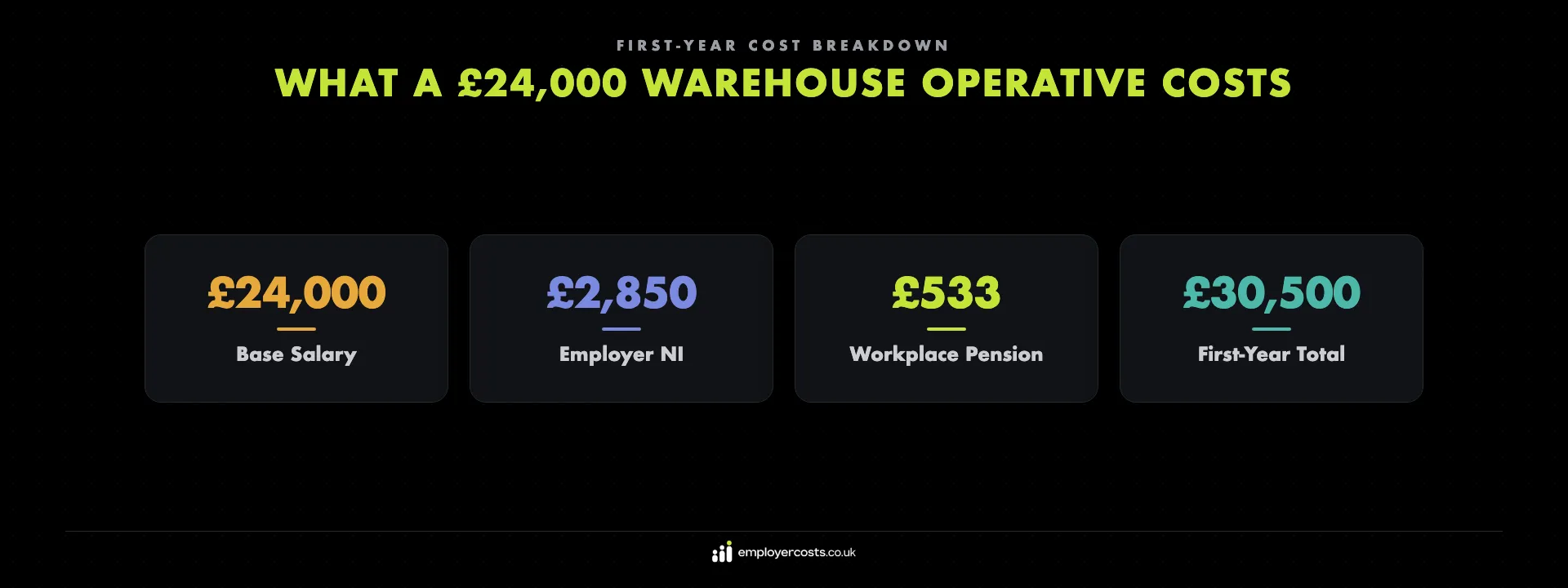
Employer National Insurance for a warehouse operative is charged at 15% on earnings above the £5,000 secondary threshold for the 2026/27 tax year, a rate published by GOV.UK in "Rates and thresholds for employers 2026 to 2027." A warehouse operative earning £24,000 a year passes £19,000 above the threshold, so the employer National Insurance bill reaches £2,850 for the year. The employer NI charge rises with total pay, so overtime and shift premiums lift this line as earnings climb above the threshold.
How Much Workplace Pension Do You Pay for a Warehouse Operative?
The minimum employer workplace pension for a warehouse operative is 3% of qualifying earnings, the band between £6,240 and £50,270. A warehouse operative earning £24,000 produces qualifying earnings of £17,760, so the employer pension contribution reaches approximately £533 a year, about £44 a month. Auto-enrolment applies from the first day for an operative aged 22 or over earning above £10,000, and many employers pay above the 3% floor to hold on to reliable staff.
How Much Holiday and Sick Pay Does a Warehouse Operative Cost?
A warehouse operative is entitled to 5.6 weeks of paid annual leave, or 28 days for a full-time role. Holiday pay is calculated on normal remuneration, so it carries regular overtime and shift premiums with it, and for hourly-paid operatives it accrues at 12.07% of hours worked. Statutory Sick Pay adds a separate exposure of £123.25 per week for the 2026/27 tax year, payable for up to 28 weeks per period of sickness. Budgeting one to two weeks of Statutory Sick Pay a year sets aside £123 to £246 per operative as a contingency.
How Much Does It Cost to Recruit a Warehouse Operative?
Recruiting a warehouse operative carries two main costs: recruitment agency fees and job advertising. Agency fees run 15% to 20% of the candidate's first-year salary, while advertising costs range from £40 to £500 depending on the platform. Both routes are set out below.
What Do Recruitment Agencies Charge for Warehouse Staff?
Recruitment agencies charge 15% to 20% of a warehouse operative's first-year salary for a permanent placement, within the wider 10% to 30% band UK agencies apply, according to "What Are Average Recruitment Agency Fees in the UK?" published by Get Staffed, 2022. A warehouse operative on £24,000 therefore generates an agency fee of £3,600 to £4,800. Hard-to-fill or specialist roles push the fee toward 25%, while temporary staffing carries an hourly markup of 25% to 50% on the base rate that covers screening, payroll, and compliance. The permanent-placement band reflects the standing UK benchmark for warehouse recruitment.
How Much Does Advertising a Warehouse Operative Vacancy Cost?
Advertising a warehouse operative vacancy costs £40 to £500, set by the platform and listing type. Free logistics job boards such as Grafter and Back to Work UK carry listings at no cost and often return applicants within hours. Paid listings on major boards such as Indeed run £100 to £300, set by visibility duration and geographic targeting. During peak hiring seasons or for hard-to-fill roles, employers add premium job-board features to widen reach and speed up the hire.
What Warehouse-Specific Costs Should You Budget For?
Beyond salary and statutory on-costs, a warehouse operative needs safety equipment and role-specific training before starting on the floor. The main warehouse-specific lines are personal protective equipment and workwear, forklift training where the role involves machinery, and shift premiums for unsocial hours. Each is set out below.
How Much Do PPE and Workwear Cost per Warehouse Operative?
PPE and workwear cost £100 to £300 per warehouse operative in the first year. That figure covers the safety equipment and uniform a warehouse role needs to meet health and safety law, listed below:
- Safety boots: £20 to £60 for foot protection.
- High-visibility vests or jackets: £7.50 to £15 for visibility on the floor.
- Protective gloves: £5 to £15 for safe material handling.
- Layered clothing: £15 to £90 for polos and jackets.
- Task-specific equipment: bump caps at around £11 or harnesses at around £35 where the role needs them.
Cold-storage or specialist roles push the figure up through thermal clothing and added protective gear. Employers assess the specific risks of the operation to fix the exact mix, holding to standards such as EN ISO 20345 for safety boots and EN ISO 20471 for high-visibility clothing.
How Much Does Forklift Training Cost for a Warehouse Operative?
Forklift training for a warehouse operative costs £150 to £400, set by the licence type and the training provider. A basic counterbalance course for beginners sits at the lower end, around £150 to £250, while reach-truck or pivot-steer certification runs £300 to £400. Employers budget for initial certification and a refresher every three to five years to hold to Health and Safety Executive guidelines. Certified forklift operators also draw higher base pay, which feeds back into the total employment cost.
How Much Do Shift Premiums Add to Warehouse Operative Costs?
Shift premiums for warehouse operatives add £0.50 to £2.00 an hour for evening shifts and £1.00 to £2.50 an hour for night shifts. The premiums pay for unsocial hours across evenings, nights, weekends, and bank holidays. Across a year, shift premiums add £1,000 to £3,600 to a warehouse operative's pay, set by how many unsocial shifts the rota carries. A 24/7 operation or a peak-season push raises both the frequency and the annual premium cost.
What Factors Change the Cost of Hiring a Warehouse Operative?
Two variables reshape a warehouse operative's total cost: seasonal demand and contract type. Seasonal peaks such as the pre-Christmas and Black Friday rush lift both hourly rates and recruitment fees, while the choice between a permanent and a temporary contract changes the mix of fixed and variable cost. Each factor is examined below.
How Do Seasonal Peaks Change Warehouse Hiring Costs?
Seasonal peaks raise warehouse hiring costs through higher pay and faster recruitment. During pre-Christmas and Black Friday demand, employers pay 10% to 25% above standard hourly rates to attract staff in a tight labour market. Agencies charge premium fees for rapid temporary placements, and advertising spend rises to fill urgent vacancies. Attendance bonuses of £200 to £500 keep workers through the full peak, and warehouses add 20% to 30% extra headcount to cover volume spikes and absence. These pressures compound the total cost of hiring across the peak window. Staffing up for peak? Our Team Cost Planner totals pay and on-costs across the whole intake.
Does It Cost More to Hire Warehouse Staff on Temporary Contracts?
Yes, hiring warehouse staff on temporary contracts costs more per hour than permanent employment. Temporary workers command higher hourly rates for the lack of job security, and an agency adds a markup of 25% to 50% on the base rate. Temporary contracts do avoid long-term statutory costs such as pensions and paid leave, which suits short-term demand. Weighing the higher variable hourly and recruitment cost against the avoided fixed on-costs produces the exact figure for a specific temporary hire.
How Do You Calculate the True Cost of Employing a Warehouse Operative?
The true cost of employing a warehouse operative is the sum of six components, worked in order:
| Base salary | annual gross pay of £22,000 to £26,000, set by experience and location. |
|---|---|
| Employer National Insurance | 15% of earnings above the £5,000 secondary threshold, roughly 12% of a £24,000 salary. |
| Workplace pension | the minimum 3% employer contribution on qualifying earnings of £6,240 to £50,270. |
| Paid leave | the statutory 5.6 weeks of holiday, plus any Statutory Sick Pay exposure. |
| Recruitment | agency fees of 15% to 20% of salary, or advertising costs of £40 to £500. |
| Role-specific spend | PPE and workwear, forklift training where required, and any evening, night, or weekend shift premiums. |
Adding these six components gives the complete first-year cost of employing a warehouse operative. Drop a specific salary into our True Cost of Employee Calculator to see the full annual and monthly figure.
What Does a Warehouse Operative on £24,000 Cost in Total?
A warehouse operative on a £24,000 base salary costs approximately £28,000 to £30,500 in the first year through the direct-hire route. That total combines the £24,000 salary, employer National Insurance of £2,850, a workplace pension contribution of about £533, advertising of £200 to £500, and role-specific spend of £250 to £700 on PPE and forklift training. An agency placement in place of advertising adds £3,600 to £4,800 and lifts the total toward £33,000.
How Do Warehouse Staff Costs Compare Across Logistics Roles?
Warehouse operatives sit at the low-cost, entry-level end of logistics roles. A warehouse operative's total first-year cost runs £27,000 to £36,000, below forklift operators and warehouse supervisors, who carry higher base salaries and added training. Reading these differences lets an employer balance a workforce of entry-level operatives against fewer higher-cost specialists. The operative remains the sector's most cost-efficient frontline hire.
How Can You Reduce the Cost of Hiring a Warehouse Operative?
The cost of hiring a warehouse operative falls through several practical levers, listed below:
- Use direct-hire platforms: boards such as Grafter place warehouse workers without the 15% to 20% agency fee and carry free listings.
- Use funded pre-employment training: schemes such as Back to Work supply trained candidates, which lifts retention and cuts turnover cost.
- Start with temporary or flexible contracts: single-shift or short-term hires cover seasonal demand without permanent on-costs.
- Invest in retention: fair pay and clear progression cut the repeat recruitment that drives cost.
- Negotiate rates directly: direct hiring gives control over the pay rate rather than a fixed agency markup.
Applied together, these levers pull the first-year cost of a warehouse operative down while holding workforce quality and operational flexibility steady, which returns the saving straight to the total cost of the hire.